
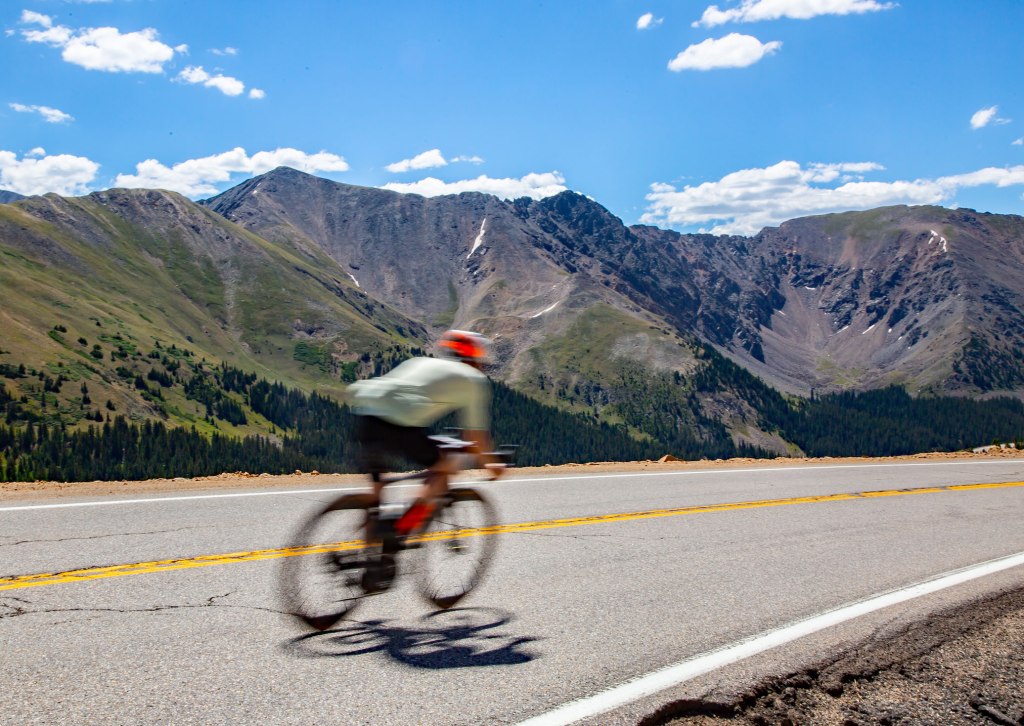
We were somewhere around Copper Mountain, on the edge of Vail Pass when the defizzed Coke began to take hold. I remember saying something like, “on your left …”
Beep!
***
I rolled over and fished for my phone on the floor. The harsh, digital gray light stabbed my retinas: 4:13 a.m.
The metronomic dripping of the upstairs coffee machine kept time as I rushed to gather my bib shorts, shoes and helmet. I quietly wheeled my bike through the entryway instead of the garage so as to not wake the baby and two toddlers sleeping upstairs. After barely remembering to pop in my contacts, I pecked my wife’s head with a kiss and then turned into the Cloud City’s frigid morning air.
“She’s the real hero — driving us to the start,” Michael Glass would tell me 10 hours later, gesturing to his wife under the finish-line tent at the end of the Triple Bypass on Saturday in Avon.
A few seconds after I’d pulled out of Leadville in the pre-dawn darkness, Glass and his friend, Jason Rosener, left the Vail Valley for Evergreen. While I stayed awake — surrendering my speakers to Dan Barreiro’s depressing lamentations over the Timberwolves’ anniversary of the Darko Miličić signing — across the canyon, Glass’ car discussed the great blackout from earlier in the week. By 6:11, he joined almost 4,000 other riders determined to conquer the 120-mile point-to-point road ride, which climbs more than 10,000 feet over three grueling passes.
“We started a little earlier,” Glass said. “Which I think helped, because it’s of course cooler.”
Coffee coursed through my veins as I parked in the City Market in Evergreen. My main priority before saddling up? Finding a bathroom. Later, as I waited in line, I sized up the competition. That bike is worth more than my SUV, I thought. Geez, carbon wheels. Do I need to shave my legs? Insecurities reigned.
Until I pushed off.
“Good luck!” someone screamed before I rolled under a massive inflatable arch marking the start of the 38th-annual bucket-list ride and its first major obstacle: Juniper Pass.
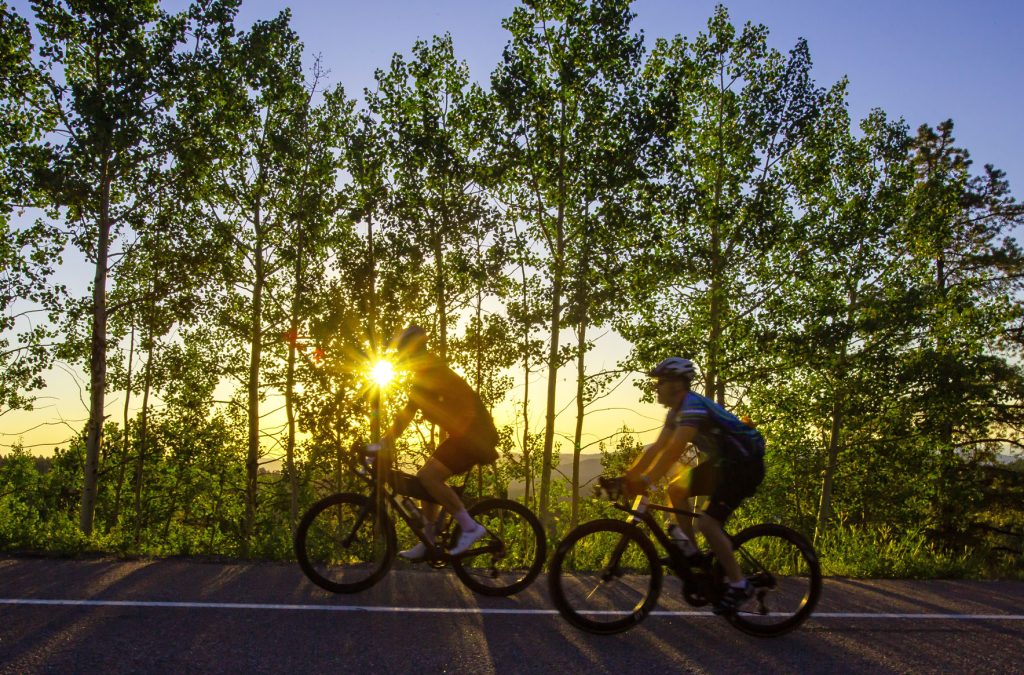
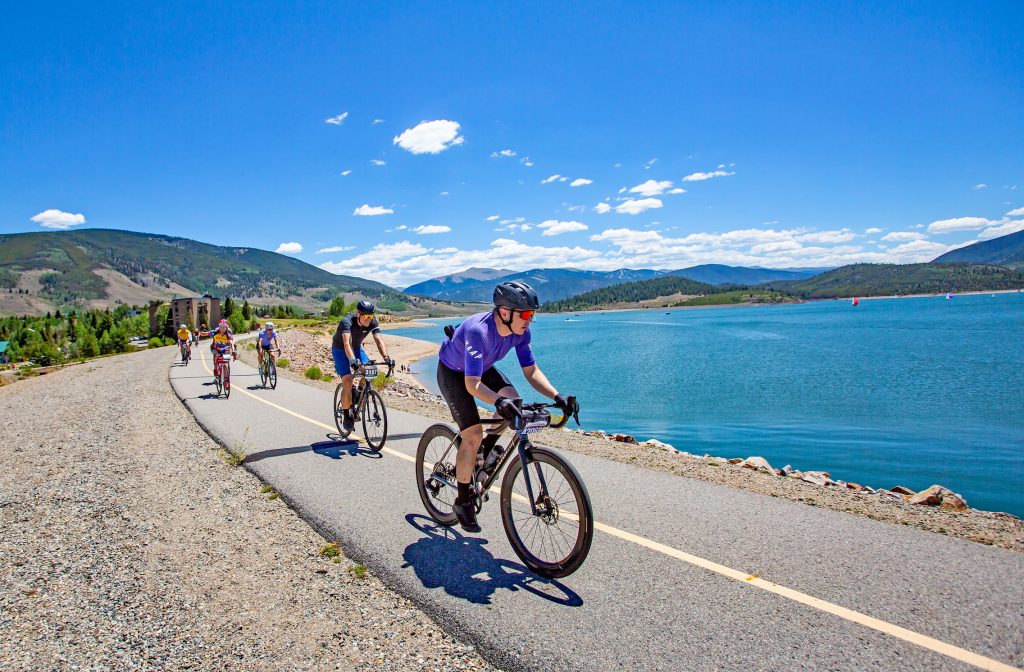
Churning my chain around the big ring, I cranked up the steady 4% grades, passing large groups of folks riding at a more leisurely pace. The Triple Bypass isn’t a race. It’s a ride. Still, soaking in the crisp Alpine air and uphill-twisting tarmac elicits a powerful athletic and imaginative flow state. Suddenly, I’m a kid playing make-believe, mimicking Marco Pantani as I stand out of the saddle for extended efforts.
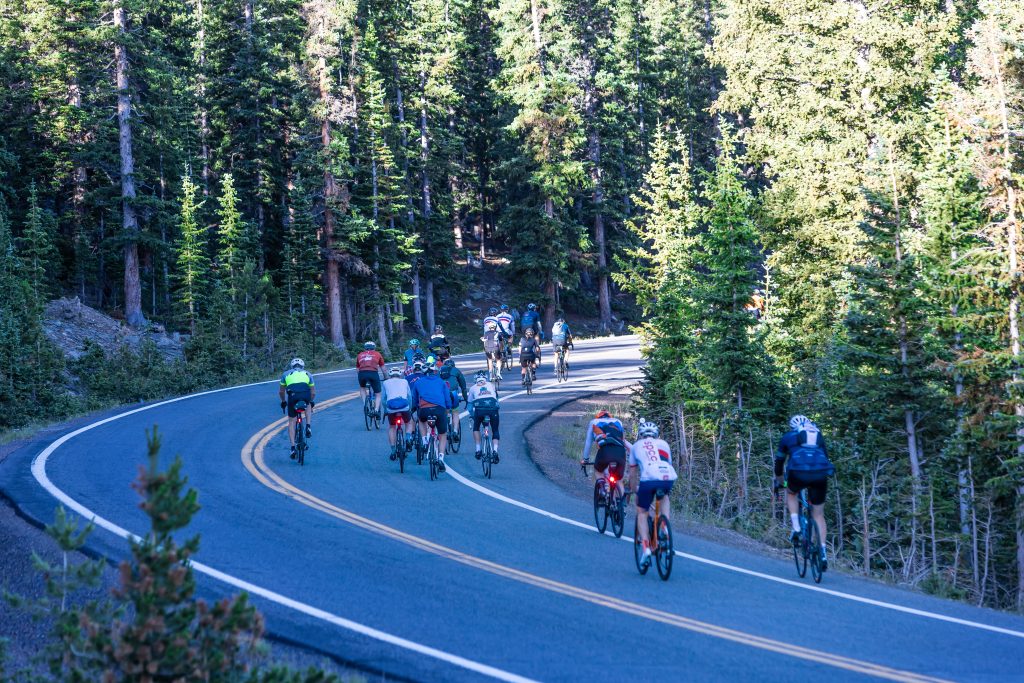
There are no podiums, but I push anyway. So does Rosener.
“That competitive spirit … it’s a DNA thing I think,” the former U.S. Ski Team and 1998 Olympian said. “I just love getting out there, still trying to compete with whomever.”
Halfway up the 14.75-mile ascent, a group offered beers alongside the shaded road.
“I was like, ‘yeah, I think it’s a little too early for that,’” said Sam Eisler, who, like me, was tackling the Triple for the first time.
“I didn’t think much of it until about a week ago,” the Cleveland native continued. “And I was looking at the route and I was like, ‘Wow this is kind of long.’”
Eisler commutes 8 to 10 miles one-way, every day. A buddy planted the idea of signing up, but his wife’s blessing sealed the deal.
“She’s like, ‘Yeah, you should do it. Sign up,’” Eisler recalled.
The horizon exploded as I rounded the first pass; jagged peaks painted into the expansive blue sky sizzled into view. My threshold-effort breathing echoed like a bass drum in my eardrums, just as another musical sound wafted my way. Bagpipes!
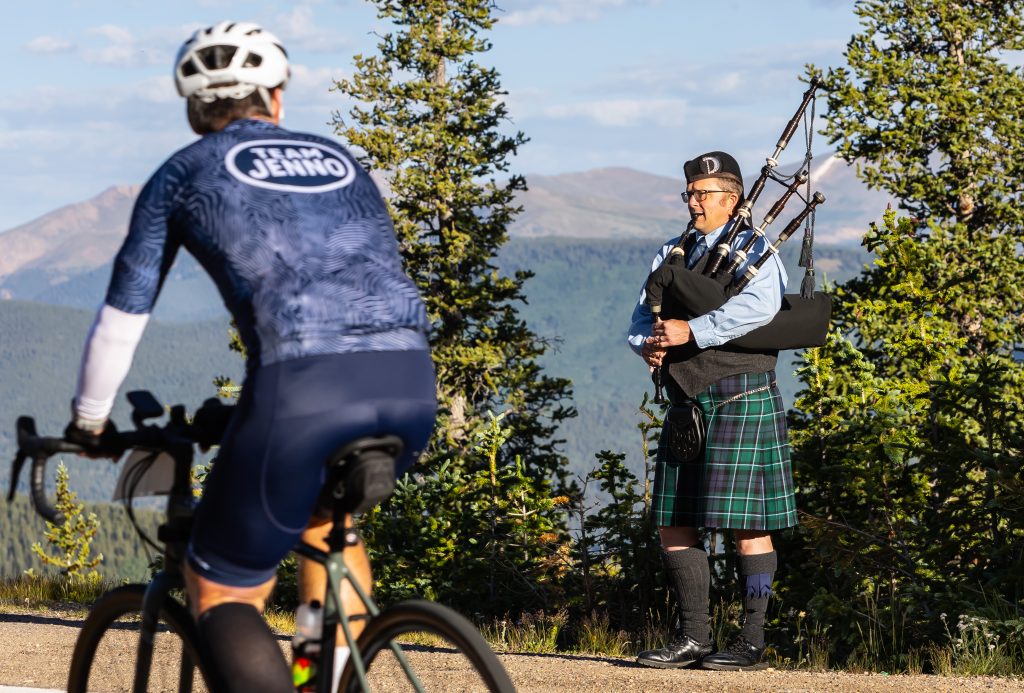
“That was my favorite part,” said Kira Hower. The former Battle Mountain runner and skier is entering her third year studying biomedical engineering at the University of Utah. She rides and runs on her own now and decided that setting a new longest-ride record would be a good way to spend a Saturday.
“It went really well,” she said. “I’m going to try and convince some people to do it with me next year.”
Glass shared Hower’s high-altitude awe of Juniper Pass.
“I think (it was) my favorite part of today,” he said. “If for no other reason than it is unfamiliar and those views — I mean, we have spectacular views — but I don’t see those.”
A regular at the Monday evening rides out of the Elk Lot in Beaver Creek, the 51-year-old was making his sixth Triple Bypass start and had lured Rosener to the line this July. The main objective for Rosener, who still meticulously squeezes out intentionally designed training sessions alongside his work as a financial adviser, was to log hours above tree line in preparation for the Leadville 100. And duke it out a little with Glass.
“I enjoy competing against myself and oftentimes my friends will participate,” Glass admitted. “We try to race up the various climbs, take a look at our times on Strava.”
Insecure in my hairy legs and aluminum wheels — but overconfident in my cadence up the climb — I pulled into the first aid station wishing I’d hit “record” on my own Strava account. As I proudly pounded my first water bottle, an anonymous speck in the sea of spandex gathered around Echo Lake, John Keller — the Strava slayer out of Boulder — began his day. Exactly 54 minutes and 33 seconds later, he’d add another KOM to his 500-plus collection.
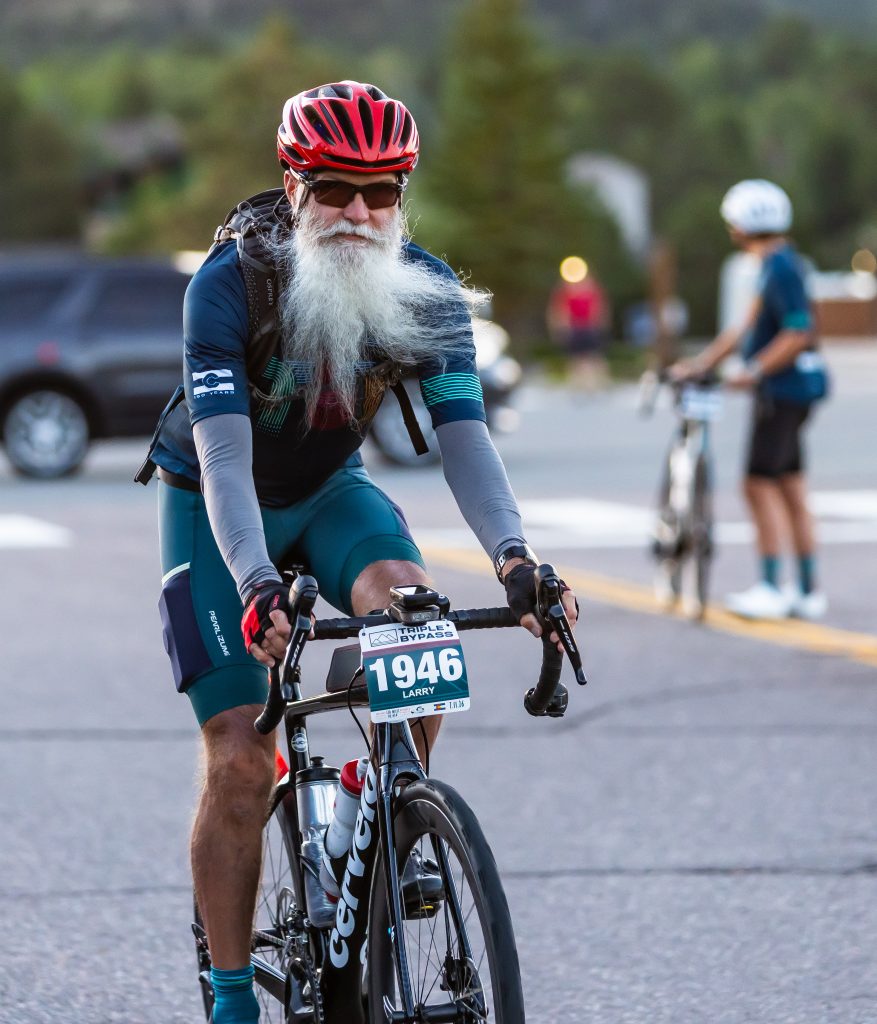
The plot thickens, the air thins and characters emerge
Every century ride is a grand theater on two wheels, packed with a shifting ensemble of characters who vanish — only to haunt your slipstream when you least expect it. Most folks are too consumed by the beastly affair — pedaling, eating and blowing snot rockets — that they miss the rich storylines and tumultuous drama hidden within the chaotic parade of bib-short-wearing weirdos. The miles don’t simply pass, they accumulate, dragging along sun burnt faces longing for relief. Longing for the gratifying peace of the finish, which never seems to arrive.
Every century ride — like the reading of a good, long book — reaches a hideous but inevitable stretch where the soul grows faint and pleads for an exit. The pavement cheats: A seemingly flat road tilts impossibly upward as riders, trapped in granny-gear purgatory, swallow a blast-furnace headwind from every quarter of the compass. No matter how many revolutions the spokes make, fragile sanctuaries of shade remain elusive and each aid station mirage dissolves into the hot blacktop.
As I workshopped how to pay homage to Dickens, Thompson and Red Smith in my literary recollection, I pedaled from Idaho Springs to Empire, the starting line for the 80-mile Double Bypass.
A Nordic skiing podcast droned on in my headphones as our peloton inherited a wave of new guests. I rode past a couple fixing a flat. A rare car — one of the only ones I encountered until the Vail Golf Course stretch 55 miles later — mysteriously pulled alongside one cyclist until it finally turned off course. One middle-aged man couldn’t make it to the second aid station and decided to prematurely indulge in a gas station slushy. When I finally rolled into the pit stop, I dropped my bike off to have the front tube looked at by the guys at Mike’s Bikes.
“Oh yeah, we don’t want you riding on this,” a mechanic said.
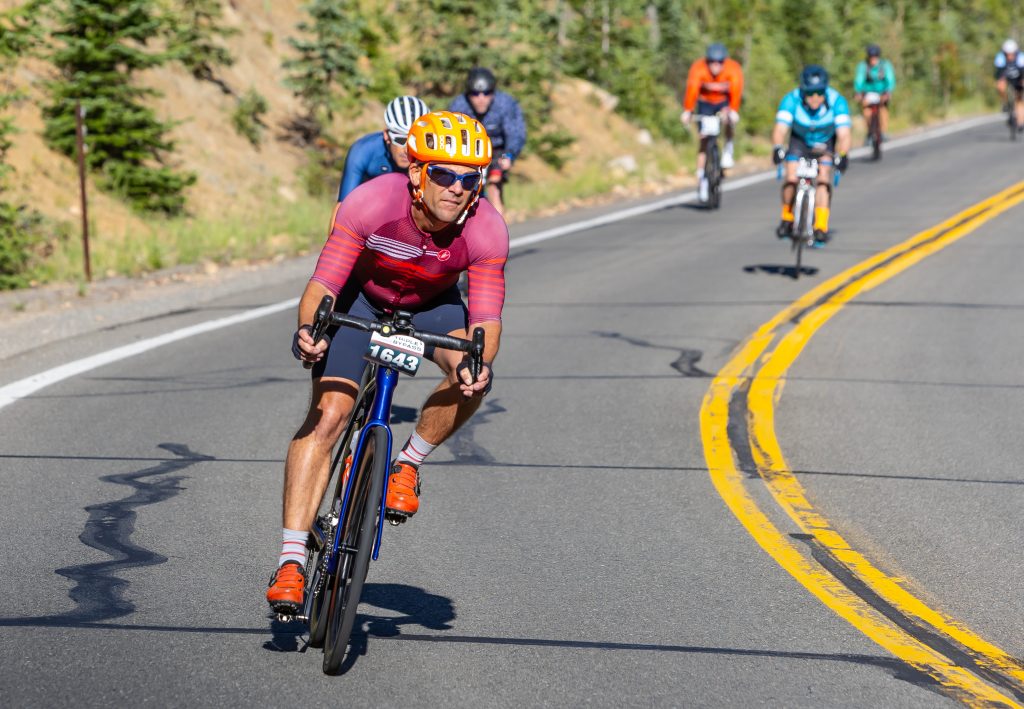
His comment rewinded the ongoing movie in my mind by 30 minutes, back to when I was ripping down the 13-mile stretch from Echo Lake to Idaho Springs and noticed the developing bulge in the first place. I thought about my kids waiting to go to the Avon Rec Center pool with me and how if the rubber had exploded, that — and a lot of other things — would probably never happen. I made my way to the nearest Tailwind refill station. Today, the Durango-based brand empty about 300 bags, each of which makes 5 gallons of electrolyte-replacement energy drink.
“It’s a lot,” said Peter Archer, Tailwind’s senior event manager, who also would pour another 100 bags of post-workout protein mix at the finish line. Tailwind has been at the Triple Bypass for three years; Archer said one factor in how the company determines partnerships is “community.”
“Triple Bypass is a great partner because the bulk of what we’re doing is giving money to charity,” he said. “To support 5,000 athletes coming from all over the world to ride in our backyard and help give them good fuel choices while they’re on the course — it just makes sense.”
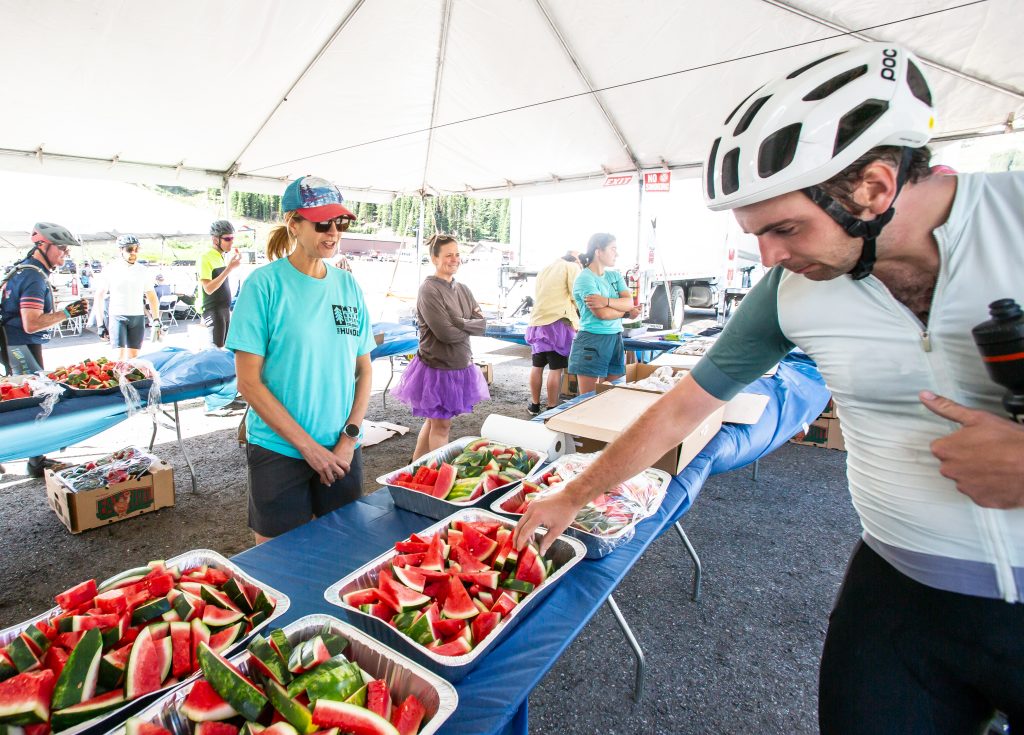
While each aid station filled hungry riders with trail mix, bananas, gummy bears, potato chips, pickles and more, I opted to keep it simple for the first 60 miles: just Tailwind. Archer was proud.
“If you can help people simplify their decisions by not trying to open a bar, snag a gel, drink a water — it’s better when you can just drink all your fuel as you go,” he said.
While guzzling four, 24-ounce bottles before noon kept me energized and hydrated, I wouldn’t have minded slotting a bar or gel in my back pocket for later. Or maybe a Neve pouch.
“People are like, ‘There was no gel on course,’ and they wish they had this,” said Nora Fierman, the Vail entrepreneur who founded the brand, a calorically dense, science-backed snack made specifically for endurance athletes. Fierman offered me a tasty sample of both her tart cherry cacao and her best-selling boysenberry beet. Despite my hesitancy toward mixing fruit and chocolate, the former delighted my tastebuds and the latter confirmed my suspicions: This would have been a nice feed-zone addition.
In September, Fierman planned to hand out products at the Vapor Trail 125, a self-supported mountain bike ride out of Salida. Last week, she quit her other job to go all in on her new business.
“It was just time. It was like, I gotta give it my best shot. I’m ready and I’m excited,” she said. “The goal for the next six months is just to say yes to everything. Fail and win as much as I can and really start to figure it out.”
The speed and ease with which the mechanic fixed my flat — compared to the time and struggle involved when I undertook the same task — suggested I had not yet failed enough to truly learn some things about biking. Shortly after receiving my steed, I clipped in and set my sights on the biggest climb of the day.
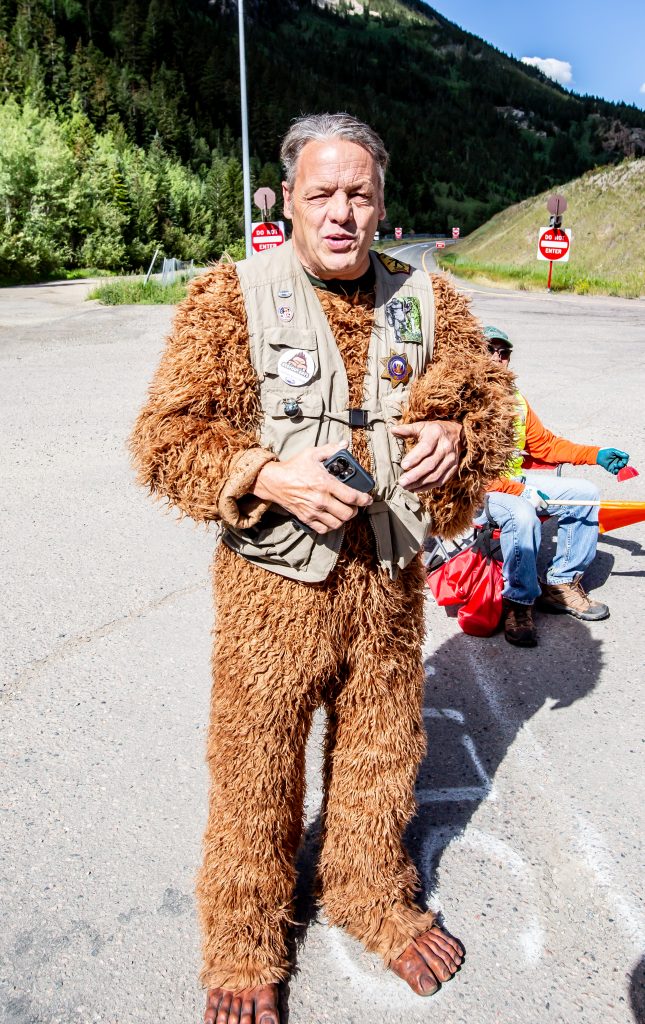
Spinning into the former silver mining camp along Clear Creek, I was buoyed by a surprising number of spectators lining the Georgetown streets. A young boy stood on the side of the road in a dinosaur costume. I whizzed past a trio of teens clearly dragged out of bed by their parents but smiling nonetheless. We rounded a turn by a woman holding a sign that read, “Don’t let Uncle Bob be a wimp on Loveland Pass!”
Eisler scanned the crowd for comic relief, too.
“There was a sign that said, ‘You’re sexy’ and that motivated me,” he said.
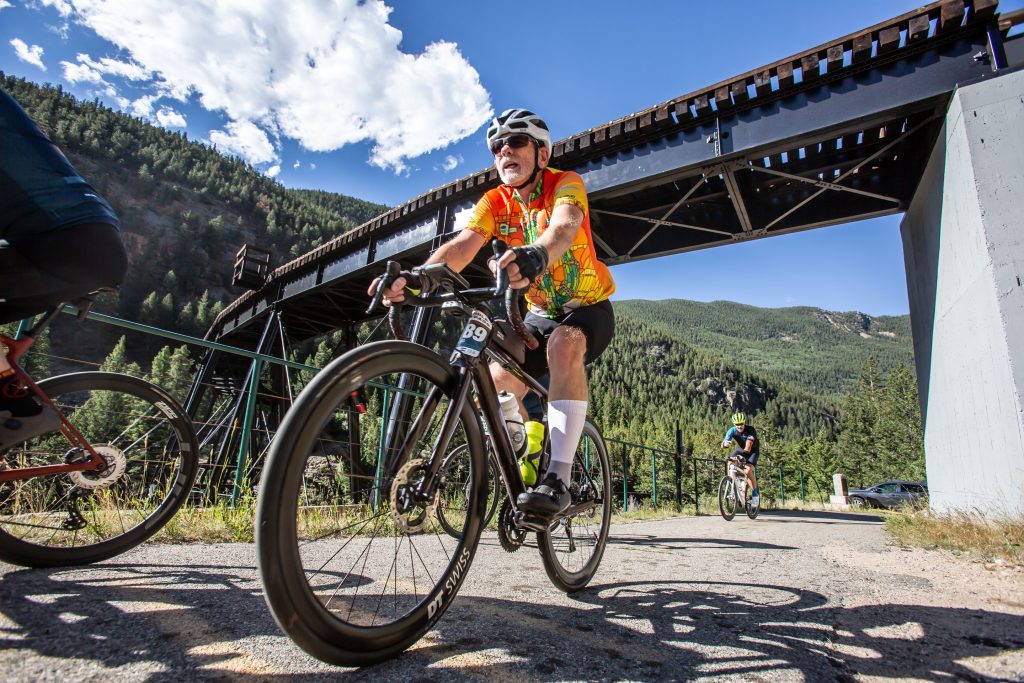
We swung up to the Silver Plume-to-Georgetown Express. I squeezed around riders on the tight bike path, maintaining my frantic cadence.
“On your left,” I repeated again and again.
“You forgot your trailer,” a voice answered from behind. I looked back, startled to see someone trying to stay on my wheel and also worried I was in the midst of another mechanical mishap.
“What?” I asked.
“Your trailer — you’ve got an attachment,” he said, pointing at my rear cassette.
“Oh, yeah,” I replied as he pointed at the ball-and-socket joint sticking out the back of my bike. “I towed the kids yesterday.”
My mind warped back to my three children. At this moment, they were probably being corralled into the car at the urging of my wife, who might be rushing from Leadville to the finish. Should I text her? The grim reality of admitting I was behind schedule suffocated my urge to update. Better plow ahead. The aforementioned fellow traveler — whose identity, Kyle Pitman, was evidenced by his helmet sticker — hopped in my draft. But the mountains have a way of enforcing solitude, and by the time we hit the steep section going up to the base of Loveland Resort, he had disappeared.
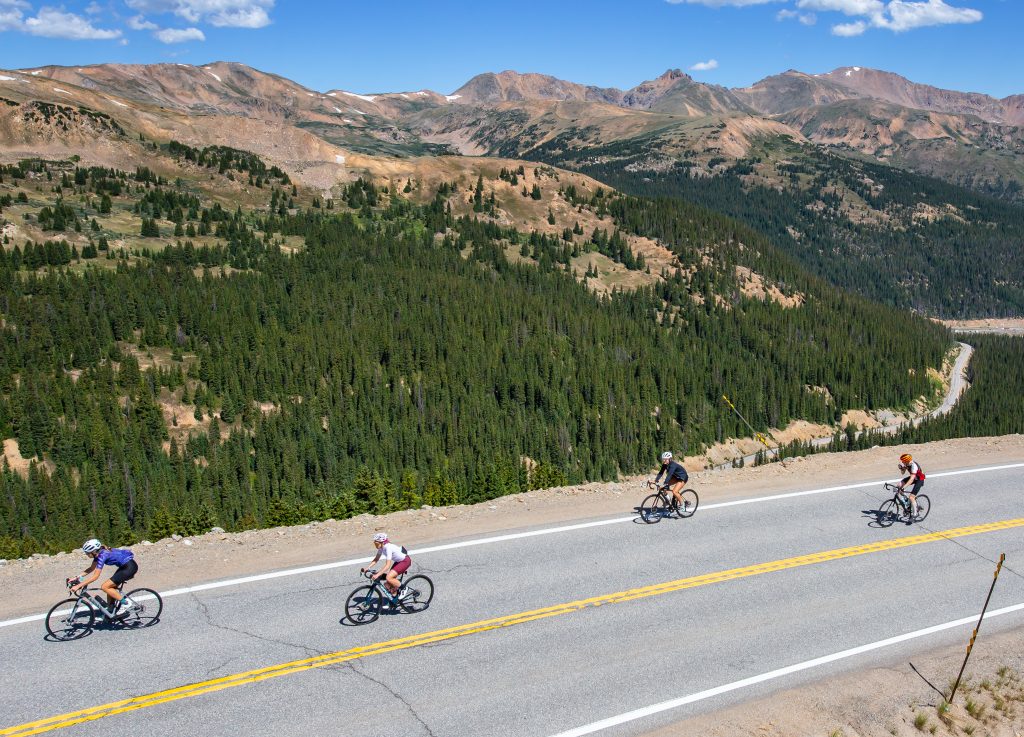
I arrived at the mile 56 refuge at 10:46 a.m. and instantly made my way to the food buffet, where I devoured three watermelon slices and grabbed a small turkey wrap. Once it was gone, I scooped up a cup of trail mix and threw myself back in the saddle. Four miles later, the sound of a second bagpipe band welcomed me to the 11,990-foot course high point. I snapped my only photo from the day, a digital receipt, which reminded me of the only other time I’d been at this crest: six years ago, an unplanned dash from Leadville to Georgetown. Back then, my wife — unburdened by the chaos of kids — served as my solo SAG wagon. I found her weeping when I arrived at the summit.
“What’s wrong?” I asked, my brain addled by the altitude. She looked at me, utterly bewildered.
“I don’t know,” she answered before settling my panic with a smile. “I’m just so happy and proud of you.”
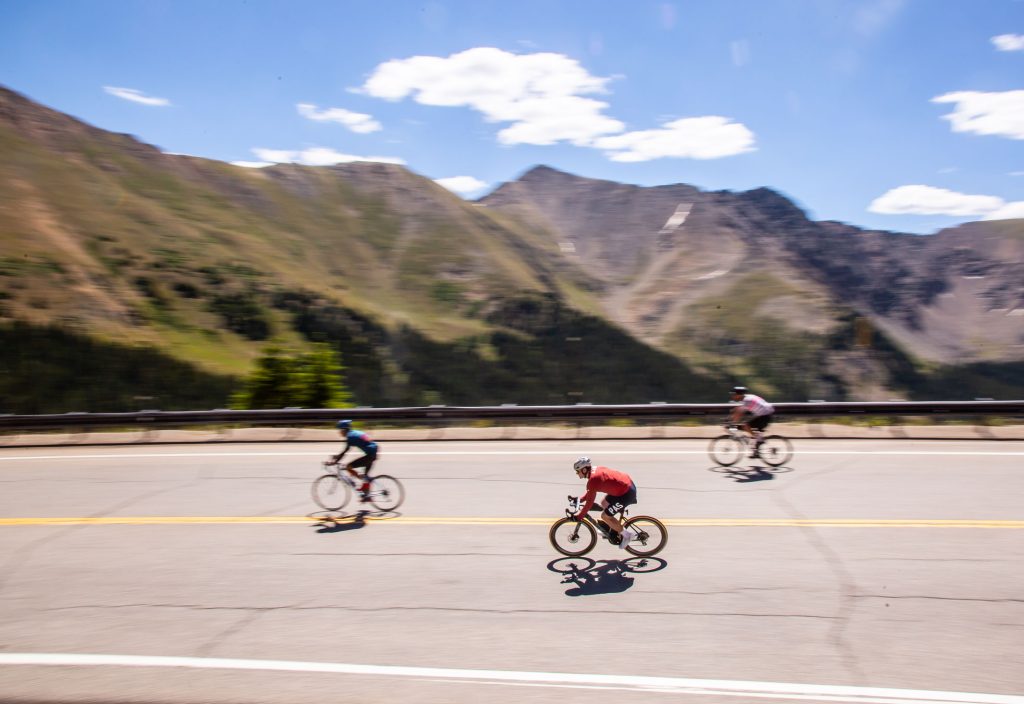
I tilted downhill for the long descent, tapping on my brakes every time I thought of my parental obligation to arrive safely in Avon. Others screamed past me. While I’m not willing to be a hero on this part of the ride, others are.
“The downhills are so fun,” said Lawrence Sones, a veteran of 15 of the last 18 Triple Bypasses. Sones said the event has always been popular. In addition to bib shorts and bikes, it’s always had bagpipes, beers and fierce, internal battles. One thing that’s been tweaked at times? The course.
“I remember years where we’ve had gravel sections, stuff like that,” he remarked. “It seems like the amount of time we spend on trails and not on frontage roads has steadily gone up.”
The other variation, at least for Sones specifically, is how ready he’s been for the ride.
“It varies from year to year, depending on what other interests I have and how busy I am,” he said. “Today, I more than doubled my mileage for the year. I took my bike out yesterday for the first time and got a quick 10-miler in to make sure everything was good.”
After Sones moved into a downtown sales office back in 2008, coworkers informed him of the company tradition.
“They were like, ‘Oh yeah, we do this thing every year; I know you just started biking, but you should totally come and do it,’” he said.
Because of the Swan Mountain Pass closure, we detoured around Dillon Dam. By the time I pulled into the Frisco aid station at mile 80, I was ready for another couple bottles of Tailwind and more real food. I snarfed two bananas, inhaled another cup of trail mix and slurped up three watermelon slices. I also grabbed two Rice Krispies bars — one for me now and the other for my daughters to fight over in a few hours. As I zipped it into my small seat-post bag, I noticed two riders resting on the curb. It was Keller and former pro Matt Cooke.
Ironically, I’ve crossed paths with Keller multiple times for various stories. Once when he won the Rad Dirt, a 160-mile race in Trinidad and again at the GoPro Mountain Games. I wrote a feature on the 29-year-old cyclist in 2024 after he left the Life Time Grand Prix and devoted himself to stalking Strava segments on all of Boulder’s iconic climbs. A couple days after that story came out, Keller was hit by a car descending Flagstaff Road early in the morning. He suffered multiple ligament tears in his right knee, two fractures in his left hand and fracture around his eyes.
Last August, he completed his comeback by setting a new course record up Pikes Peak in the Broadmoor Cycle to the Summit.
The riding partners peeled away onto the curvy Frisco bike path. I desperately wanted to chase them up Vail Pass and get a taste of their talent, but I dilly dallied out of the porta-potty and never caught up.
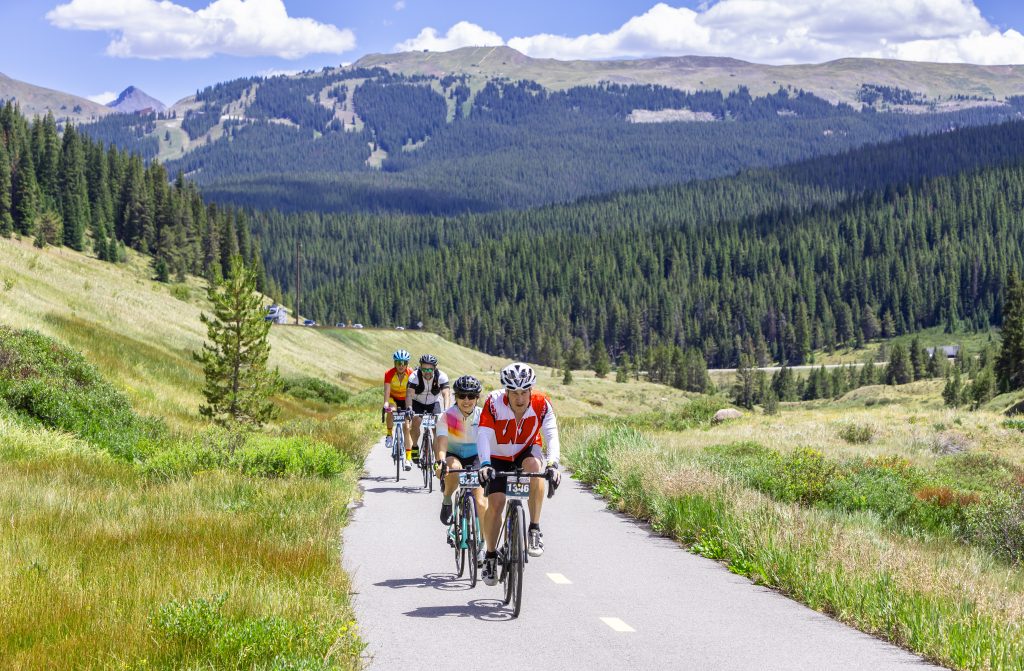
I smashed from Frisco to Copper Mountain anyway, then dialed it down a few watts through the village before hammering as hard as I could to the top. On the final switchback, I spotted Pitman and inched past him again. It’s funny how in long rides like this — even with thousands of people all on different pacing agendas — a few characters seem to be consistently woven into the tapestry of your day. It wouldn’t be the last time I would see the paracycling Team USA world championship member.
Worried about my wife with the three little ones baking in the sun at some park by Nottingham Lake — especially since we both had figured we’d all be walking to the Rec Center for a promised pool date by this time — I took a single swig of Coke and started down.
On familiar roads again, the temptation to coast past the golf course, stroll through Dowd Junction and wave at the Vail Daily office took hold. I was spent. Exhausted.
Whoosh!
Out of my left ear, even over the T-Paine hits blasting away, I heard Keller turn over his largest gear with immense force. He and Cooke — who acknowledged my solo efforts with a two-finger wave — roared past me, single file. Pitman was third on the train, and with an encouraging gesture (we were allies after all) he motioned for me to hop on.
Searching for the slipstream, I lurched from 23 miles per hour to 32. We tore past folks who seemed to be standing still. I watched Keller and Cooke up front, working their magic, mysteriously coaxing cars into proper places as they careened around roundabouts with precision and predictability, their intentions as clear and smooth as the hum of their rear hubs. Every once in a while, Keller — perhaps leery from his accident — asserted his presence with a more noticeable signal. When he knew we needed to call off the paceline, he flashed an open left palm against his back. No one talked, but the synergy was palpable.
We rushed toward the Vail Daily offices in EagleVail faster than a sports writer on an evening deadline after a double-overtime playoff game. Coming over the last ascent of the day — a familiar, subtle rise by the Vail Brewing Company — Pitman pulled out and moved to the front. Keller disapprovingly shook his head. Cooke covered the break. I held on for dear life. Between their retaliations and a quickly-approaching, inconvenient red light, I found myself precariously off the back.
I’ve come this far, I thought. And by golly, this is fun. I lashed down on my pedals, summoning every ounce of sprinting power from the salt-crusted, genetically slow-twitch quads churning beneath my dripping brow. Somehow, I reconnected. I had to impress my kids and wife. On the final turn, I heard her familiar cheer.
For the last 18 minutes, I’d been in the final throes of Stage 14. But 18 seconds after crossing the line, my Tour de France fantasy faded as my red-faced, smiling daughters rushed to give me a quick hug.
“How was it?” my wife asked, the sound of her voice thrusting me back into reality. The brevity of her question, juxtaposed with the sheer immensity of the endeavor I’d just completed seemed like a subtle injustice. Maybe it’s what happens after the third kid, or maybe it’s when 40 draws near, but any perceived mental misunderstandings don’t matter to me anymore. I shrugged and struggled through a brief report but was quickly relegated to sitting quietly in the grass. She’ll have to read the story later, I thought. My daughter swayed back and forth, anxiously waiting for the pool.
“Nice riding with you,” Cooke said. “Now, go get something to eat.”
The challenge
“It’s been a good day,” Archer said to me when I casually asked him about his thoughts on Courtney Dauwalter winning another Hardrock 100 earlier that morning. The Leadville-based athlete has her own Tailwind flavor, “Dauwaltermelon.” Apparently, fellow Tailwind-sponsored cyclist, Durango’s Chris Blevins, had also used the brand’s new high-carb fuel to snag bronze at the World Cup short track in Andorra that day. As we chatted, riders came up to fill their bottles with Archer’s concoctions.
“It’s always fun to see an active community out here,” Archer said.
Glass, Rosener, Hower and the Vail Valley Vixen riders we all saw fit Archer’s description.
“We saw a couple of other cycling friends out there that we ride with regularly,” Glass said.
While this is the only event Glass signed up for (so far) this summer, Rosener remains fixated on the upcoming Leadville 100. He knows he’s riding well enough to slice considerable time off his 8 hour, 45 minute finish from last year. But he also knows everything has to go right.
“That long of a distance, so many things have to go your way,” he said of the race, which serves as a sort of age litmus test for him. “If I can do anything better,” he continued before pausing to contemplate his comment further.
“There’s only a finite amount of time,” Rosener finally stated. “I’m not going to be able to do this forever.”
True. But where, amongst the 3,519 finishers listed in the results, was Father Time?
Of all the views, fancy bikes, tasty treats, bagpipe sounds and intimidating, chiseled legs, one image stands out from my first Triple Bypass. About 45 miles in, I passed an older gentleman who, judging by the differences in our two speeds, likely had started his day at least an hour earlier than myself — and likely wouldn’t finish until several hours after. In fact, even when my day was finally over — after eating, interviewing 10 people, finishing up that glorious pool date with my kids, driving all the way back to Evergreen, walking around City Market to find interstate-friendly edible items and then driving all the way back to Leadville while they ate — only then did the last finisher cross, at 9:11 p.m.
I wonder if someday, that will be me, I thought, thinking of the man as I tucked my kids into bed. I hope it is.
When I asked Sones what brought him back to the event year after year, he said something that deeply resonated with me. And to be honest, the sentiment seemed to seep out in my conversations with Glass, Rosener, Hower and even the soft-spoken Keller — who woke up the next day and placed second in the 70-mile, Ned Gravel event, which featured another 8,300 feet of climbing.
I guess we’re all searching — at all ages and abilities — for the same thrill.
“Just the challenge,” Sones said. “You put something really big and tough in front of yourself and prove to yourself — yep, I went and did it.”
… “And I enjoyed it.”
 Seder-Skier.com
Leave a comment