

News Bytes: Stars descend upon Muonio for final World Cup preparations
- Erik Valnes took the sprint in Muonio, Finland last Friday. The Norwegian star finished third in the following day’s 10K classic interval start. Russian Saveliy Korostelev took the win, 5.4 seconds ahead of Ari Luusua. Luusua was sentenced to a 4-year ban in 2022. Last year, he came back in January and race marathons — finishing 8th in the Vasa. Now, it looks like he might be targeting a World Championship start. Antoine Cyr finished eighth, one spot in front of Friedrich Moch. Korostelev seemed pleased with the result (click for quotes in Sport-Express).
- On the women’s side, Kendall Kramer finished 25th, 1:36.5 back from winner Caterina Ganz (29:40). Jasmi Joensuu (+1.0) and Johanna Matintalo (+8.1) rounded out the podium. Couple interesting notes: 1) Russia had two in the top-9 behind Natalia Terenteva (6th, 16.3 seconds back) and her younger sister, Dariya Nepryaeva (9th, 33.7 seconds back)…2) Norway didn’t bring the big dogs here, but the top finisher was Andrea Gulbrandsen in 15th. Eighteen year old Mia Brustad-Olsen was 23rd.
- Meanwhile, it remains to be seen whether the weekend in Muonio will be the last time fans see Korostelev. Last week, Finnish authorities decided no Russian athletes would be granted visas, effective Nov. 16. Sweden and Norway plan to follow suit. According to Langrenn, this will also apply to Russians who already have valid visas from other Western European countries. Bolshunov’s neutral status was officially denied on Friday. Russia will appeal to CAS, as expected.
- One more Muonio note: How about Jakob Moch?! Dang…. he earned my bronze roster slot (see below) for my fantasy skiing team….
Join our FIS Gaming League!
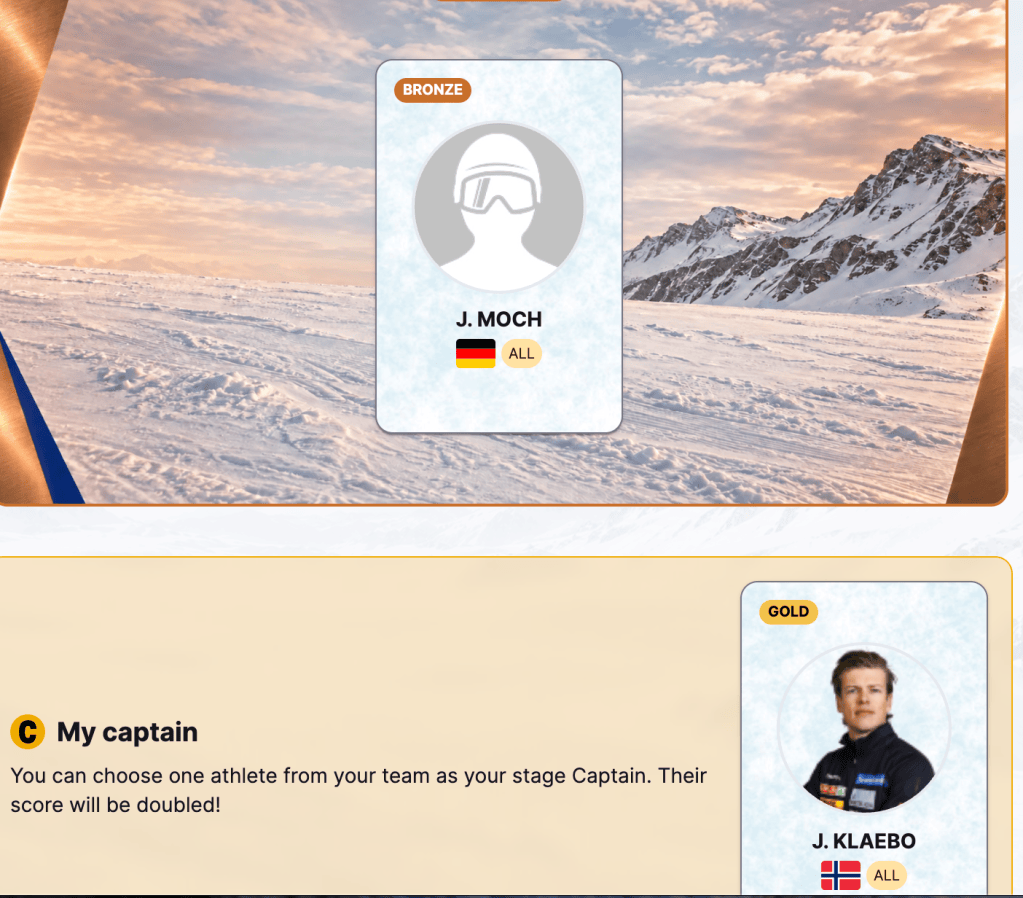
Join me in the league now no.681 : GripWax Nation!!!
If you know, you know. Keep on Striving. Keep on Skiing.
By clicking on this link : https://play.fis-ski.com/#welcome/register?sponsor_player_code=xec9w3g&league_id=681
A new Nordic ski book!?
Past Seder-Skier Podcast guest Doug Edmonson — author of “Norm Oakvik: The Inconspicuous Coach” has a NEW book out.
“Behind the Champions: Minnesota Nordic Skiing’s Unsung Heroes” takes a look at the coaches, assistants, volunteers and officials who made Minnesota high school Nordic skiing possible. I reached out to Edmonson for some comments on the text, which is part 5 in his Minnesota Nordic Skiing series (the full list is below).
Edmonson said he started working on the book last spring, drawing from material he’d accumulated through conversations related to his books on Oakvik and Ahvo Taipale.
“Those books focused on the two club coaches and the many high school champions that they coached,” Edmonson said. “I realized that the high school Nordic coaches were the unsung heroes.”
Edmonson attended and set up a book booth at the 2026 state meet in Biwabik, the 60th-anniversary of his co-title with Dave Quinn. As he walked around the venue, he got an up-close look at the “frenetic activities of the coaches and their teams preparing for the events.”
“I saw, firsthand, how much attention to detail went into coaching a ski team, the sheer amount of energy to get the waxes right, get the kids prepared to race,” Edmonson said. “These are just seven or eight kids at the state meet. These coaches managed up to a hundred kids during the ski season and every one of them gets some attention. Someone needed to talk about their monumental efforts.”
Edmonson spoke with roughly 50 people. He also did a few follow-up interviews with individuals he’d spoken to for his other books, digging deeper into their life story, coaching experiences and tales from their teams.
“In some cases, I did not have any contact information so I relied on HOF biographies, Lifetime Achievement award summaries and the like,” Edmonson said. “I knew many of the old time coaches from the 1960s and 1970s and had a lot of information from my research on Norm Oakvik about the very early coaches.”
One of Edmonson’s favorite sections is about Pat Lanin, who launched the Minnesota Road Runners club back in the early 60s. Lanin tried to convince Edmonson — who ran for the Gophers eventually — to run year-round.
“And I somehow convinced him that cross-country skiing was a great off-season sport for runners,” Edmonson said. “When he took it up four or five years later, he had almost immediate success with the Hopkins ski teams, producing five straight individual and team titles. He got help from Norm Oakvik and Tim Heisel, a two-time state champion who hung around after graduation to help Pat. Pat knew how to train runners and applied it to the ski team with immediate success.”
Edmonson and his wife, Mary, have known Pat and Emily Lanin for nearly 65 years, naming their daughter after Emily.
Edmonson got to know Bill Simpson, Dave Johnson, Bonnie and Dave Kask and several others in the writing of his book.
“Just about all the coaches I interviewed are the nicest people of the planet,” he said.
Edmonson said this book is the fifth and final text in his series. He might mine through the mountainous pile of Minnesota Distance Running Association newsletters and race results at some point to compile a history, and he has another project, “On the Line,” looking at the start of the University of Minnesota’s women’s track program. Finally, he’s 75% of the way through a genealogy project.
“If there is another ski book, the seed of that book has not germinated,” he said. “I think I am done.”
“There is some great history of early Minnesota Nordic ski coaches that is captured in this book; stories that would be forgotten forever without the book,” Edmonson continued. “I have tried to cover all of the HOF coaches, many of the assistants of the year and race officials that never get recognition. I probably missed some good coaches and I apologize for that omission. I just hope I have done justice to the Nordic community with all of the books.”
When asked why the book matters, Edmonson reflected on a two-week span in 2006 when he observed the Richfield ski team with head coach Jim Lundberg and Edmonson’s son, who was an assistant. Edmonson skied 100 miles over 14 days and then did the Mora Vasaloppet with his son.
“I saw how much effort went into managing a team. It is an incredibly hard job in harsh conditions. The amount of knowledge to teach two different techniques, wax two different types of skis and manage the logistics of moving teenagers from school to ski trails and home safely, just boggled my mind,” he said. “These men and women devote their winters (and summers) to making kids successful on skis. It is more than a full-time job and I felt it was important to recognize their efforts.”
Minnesota Nordic Skiing series
- “Ahvo’s Journey: The remarkable story of Ahvo Taipale and Finn Sisu” (Thought from Edmonson: (This book) was a commissioned biography for Ahvo Taipale, a delightful ancient Finn who came to America and made a new life, starting a ski shop, ski club and summer training clinics. He taught Jessie Diggins how to rollerski. He had a dramatic impact on Minnesota Nordic skiing as he embraced skating in the early 1980s. He has given so much back to the community. It’s a great read.
- “Behind the Champions: Stories of Minnesota Nordic Ski Coaches, Assistants, Volunteers and Officials”
- “Norm Oakvik: The Inconspicuous Coach and Book of Champions” (Thought from Edmonson: When I wrote “Norm Oakvik: The Inconspicuous Coach”, I also included a history of the state meets from 1935 to 1980. I got some grief from state champions from the 1980s and 1990s that weren’t in the book. For that reason, I compiled the “Book of Champions” two-volume set of state meet results. It’s heaven for a ski stat-nerd but it is mainly results so it’s not a book, per se.
- “Book of Champions, book 2 (2001-2025)”
- “Book of Champions, book 1 (1935-2000)”
NCAA news: Bobcats sign Drevlow, Laverdiere
The Montana State University Bobcats signed Loppet Nordic Racing’s Logan Drevlow and Ski and Snowboard Club Vail’s Landon Laverdiere for the 2027-2028 season. Drevlow is currently a senior while Laverdiere is taking a PG year with the Bridger Ski Foundation.
Drevlow has won three straight Minnesota state titles in skiing — and he could be the first athlete, male or female, to win four if he can do so this February. He’s also won multiple junior national titles, including a perfect three-for-three sweep at the U16 level in 2024 in Lake Placid. Laverdiere won the 2026 classic sprint at Junior Nationals and is a five-time Junior Nationals All-American.
I caught up with MSU coach Adam St. Pierre last week. Here’s what he had to say:
“I’m really excited to add Logan and Landon to our men’s team for 2027. We will have some strong skiers returning to help push them to greatness.”
On Drevlow: Logan is an exciting athlete to coach. He’s seen success on skis and on a bike — he’s got an engine! I think his ceiling is very high in both distance and sprint events and that he will develop into an international caliber all-around skier. We’ll shift a little of his focus from bike to ski and I expect that increase in specificity of training will lead to some big improvements over the course of his career at MSU.
On Laverdiere: Landon is a skier I really wanted to add to the team in Fall 2026, but did not have any roster spots available. I’m ecstatic that he opted to do a PG year and sign with us to start in Fall 2027. Landon is one of those rare altitude kids who can sprint, and boy can he sprint! This fall, he’s been training with the Bridger Ski Foundation PG Team, often training alongside the BSF Pro Team — and (BSF coach Andy) Newell says Landon is “speedy.” Which is high praise coming from Andy!
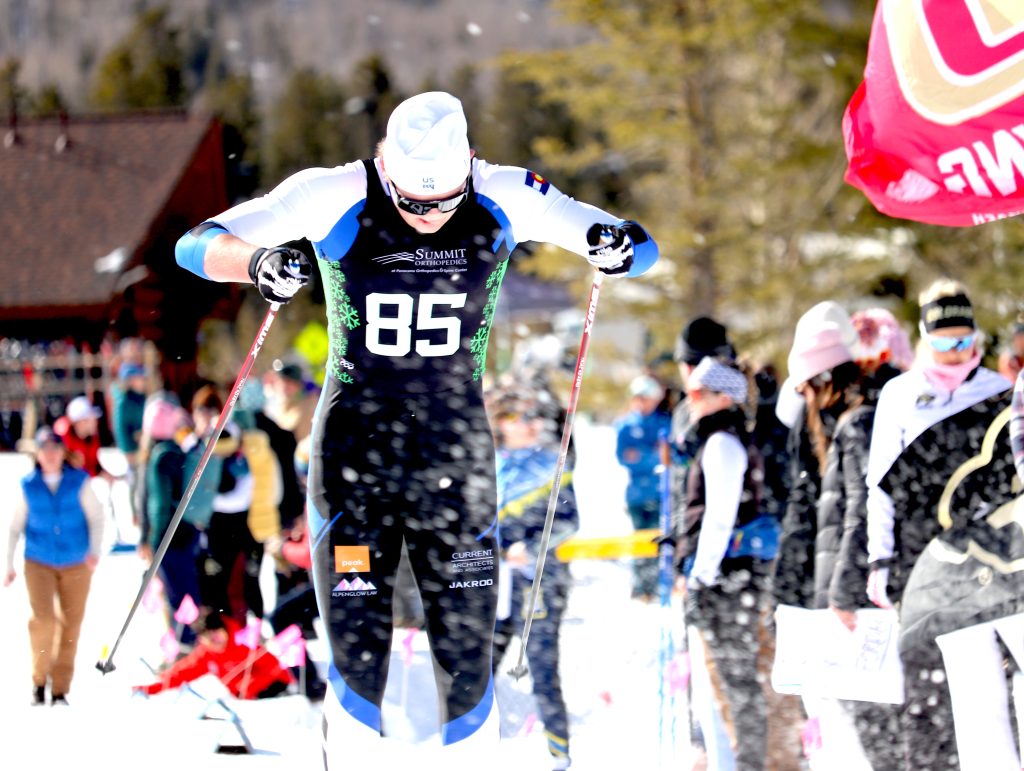
To gain early access to our full conversation (about 48 minutes) with MSU coach Adam St. Pierre, became a member of GripWax Nation today! Full pod drops to everyone on Dec. 10!
Loppet Ledger: Birkie West featured in Colorado Sun
The new Birkie West race at Snow Mountain Ranch was featured in the Colorado Sun on Nov. 6. Really nice story, actually — you don’t always get those in standard news outlets!
A few key things to know:
Nugget from the article: Former Snow Mountain Ranch Nordic director Bill Pierce, who came from the Midwest, first explored a partnership with the Birkie before the idea stalled during the pandemic. A ranch volunteer revived the conversation about two years ago, and the organizations began seriously working toward an event this spring, Paulson said.
Tid bit from Sno Racing website: Cash prize purse for the top three men and women overall. Organizers expect more than 500 racers and 750 spectators.
- When: Jan. 22 (youth/junior) and 23 (21/42Ks)
- cost: Now it’s $110/$100 for adutl races by the time you’re reading this (was $80 and 70 through Nov. 12). And $25 for the 4K and 6K and $15 for the 1K or 2K
- distances: 42K and 21K skate + 1, 2, 4, and 6K youth/junior races
- courses: Snow Mountain Ranch in Granby – TBD based on snow
- quote from Jeff Paulson, SMR nordic director: “When we announced our partnership with Snø Racing, we told everyone to stay tuned for an exciting new event. This is it. The Birkie has always been about more than the finish line. It’s a celebration of everyone on the trail, from first-time racers to seasoned marathoners, and we can’t wait to share that feeling with Colorado.”
- quote from Ben Popp executive director of the American Birkebeiner Ski Foundation: “We thought, this would be really great for the ski community — to partner with the amazing athletes of Snø Racing, you have a great venue, we have a reputation for putting on great events,” he said. “What if we put it all together to make a great event in the Rockies?”
- tips: pace yourself.
Lumi Experiences trip news
A good blog to subscribe to is Lumi Experiences. Here is a note from founder Garrott Kuzzy from Nov. 6:
If you’re interested in skiing in Europe this winter, there is still limited space on several Lumi trips, including:
- Seefeld & Seiser Alm Sight-Skiing trip, January 10 – 17, 2027
- Norway Sight-Skiing trip, February 7 – 13, 2027
- Finlandia & Tartu Worldloppet trip, February 19 – March 1, 2027
- Achensee & Engadin Sight-Skiing trip, February 25 – March 5, 2027
- Slovenia & Italy Sight-Skiing trip, February 28 – March 6, 2027
- Iceland Fossavatn Worldloppet trip, April 12 – 19, 2027
Reach out to reservations@lumiexperiences.com for a trip itinerary or to sign up.
Teton Ridge Classic returns!
Finally, mark your calendars for the Teton Ridge Classic on Jan. 30, 2027. The 24th annual will be that Saturday in Victor, Idaho.
“We’re excited to welcome skiers back for another year of great racing, beautiful trails, and community fun,” an email stated on Nov. 11. “Whether you’re a longtime TRC racer or joining us for the first time, we hope to see you at the starting line!”
Dave Bergart joined the podcast last December to talk about the classic-only event — you can check that out HERE.
Last year, about 50 athletes started the 21K, with Christian Otto and Katie Paddock taking the men’s and women’s titles, respectively. Another 33 contested the 12K, 20 raced the 8K and about 25 kids did the 0.5K or 2K races.
“We’ll be updating the TRC website soon with race distances, course information, registration details, and everything else you need to know,” the race committee stated. “For now, save Saturday, January 30, spread the word, and start getting excited for another great TRC! See you on the snow!”
A new local Nordic ski association has big plans, makes big promises
“….to see a film that will change your life.”
Wow. Intense.
Got this email regarding a new trail and club starting up in Leadville last week. If there was an event that required boots on the ground reporting, it’s probably this, right? Sadly, I had a stressful work day that night and opted for a 2-hour headlamp ski with Ajee instead. I apologize, Malta Mesa Ski Club. But, I’m eager to see what you accomplish.

Seder-Skier Podcast
- Nov. 16 – Alayna Sonnesyn
- Nov. 17 – CARCAST: Do some workouts fall meaninglessly to the ground?
- NEW THIS WEEK: Nov. 19 – NENSA Competitive Program Director Ben Theyerl
- Nov. 24: CARCAST: Don’t be the coach who posts up at the bottom of the hill
- Nov. 26: NCAA previews: CU coach Jana Weinberger
- Dec. 3: NCAA previews: DU coach Eliska Albrigtsen
- Dec. 10: NCAA previews: MSU coach Adam St. Pierre
- Dec. 17: Loppet Nordic Racing head coach Chris Harvey
- Dec. 24: Christmas Eve 24-hour Santa Claus livestream with Novi
- Dec. 31: NCAA previews: St. Michael’s head coach Kyle Steitz
- Jan. 7: Out There Nordic Bjorn Hansen
Commentary (need to sharpen up): Act your age — is it just me, or do Nordic skiers think they’re ‘old’?
Galen Rupp, who has about as much to prove in the running world as Jessie Diggins does in the ski-verse, recently ran 2:06 in the Chicago Marathon. Rupp is over 40 and has four kids — and a fifth on the way. His two Olympic medals and countless former American records are evidence that he succeeded in living up to the hype which warranted the professional focus he adopted as a high school senior. And even with his extravagant, full resume, Rupp keeps on grinding — and shows no signs of stopping.
What is perhaps more remarkable is the fact that Rupp has spent the last four years struggling through health issues, any of which could have been considered a strand of the proverbial hair that broke the camels back. But he never settled down and retired. Instead, Rupp navigated a multiple surgeries, arduous rehabs, reconstructed his stride, and now appears on a path suggesting his very best marathon might still be in front of him. At the very least, another Olympic berth – which would be his fifth (and that’s after missing a cycle in 2024) — is right there.
Juxtapose that with Nordic skiers.
Jimmy Clugnet, on a recent Skirious Problems Podcast, joked about being ancient at… 29? Ketterson, on the same podcast, joked at the preposterousness of trying for the the 2034 Salt Lake Olympics — the first home Winter Games in 32 years — because at that point he would be … 36 going on 37?
When I was 10, 37 was old. Michael Jordan and John Elway rode off into the sunset at 35 and 38 with the Bulls and Broncos, respectively (though, Jordan came back and then retired a third time at 40). I’m not going to lie, they seemed kind of old. At least they ‘went out on top.’
Brett Favre was aptly named the silver fox when he celebrated his 40th birthday while guiding the Vikings to the NFC title game in 2009 (and came back for another year….). He seemed super ancient. Then, something interesting happened.
Tom Brady got better after 42, won a Super Bowl, and passed for 5,000 yards at 44. Aaron Rodgers put up his best statistical season at 38, and Lebron James ruled NBA free agency conversations well into his late 30s and set records into his 40s. Super shoes and other training technologies have reinvigorated runners, who now regularly rediscover themselves or rewrite their personal record books late into their middle ages.
Andy Wacker is one local example that sticks out. The 38 year-old was an NCAA DI runner at CU. His exceptional track and cross-country speed translated well to the trails, where he won a few national titles. He underwent achilles surgery at some point in there, before I started writing about his career, but now, he’s gone BACK to the short speed stuff. This summer, he made it his mission to run a sub-4 mile, which he did (on the roads). He also ran 28:20 for 10K at the Twin Cities 10-miler in October.
In my opinion, these examples present a physiological disconnect I’m struggling to square.
In running, the primary physiological variable that breaks down from age — the one which I believe would have the most detrimental affect to performance and the one which can’t really be maintained indefinitely (or close to indefinitely) from aging is tendon stiffness. All those hard, fast, road miles and high-speed intervals make your achilles’ rebound with significant force-impact, which in turns plays a pretty pivotal role in running economy. You need it to be good on the road and track.
Keeping that stiff requires elements that come with a high injury risk: sprints, plyos, high mileage on hard surfaces, etc.
What is required for great skiing? Are those ingredients trainable, even as one ages? I would argue they are.
Other than just aerobic strength and fitness (I will assume the latter variable in this hypothetical) skiing fast requires good technique and muscular power. Technique can be perfect and can be improved at any age, so that’s out. Power does depreciate, but it doesn’t have to at the same rate (or cost) as tendon stiffness in running. And certainly, it’s safer, from an musculoskeletal injury risk standpoint, to maintain strength and power in the weightroom than it is to maintain long-term explosive tendons in sprinting and running.
Further, one could argue that top-end speed isn’t even in the end all be all for Nordic skiing. It’s increasingly important in today’s style, courses, formats, etc., but your old school, slow-twitch grinder can still win, or at least podium, in 50K races.
So, we’re left here: In my opinion, skiers don’t have a physiological excuse for dying off earlier than runners. If anything, they should be able to last longer. Why is it, then, that we tend to see professional runners do everything in their power to squeak out another shoe sponsorship or Olympic cycle while pro skiers are more than ready to retire by 30 — if they’re lucky enough to make it that far?
My friend and I — both in our mid to late 30s — were discussing this on a recent run. We both agreed that there’s something about the skiing lifestyle that lends to a specific type of burnout. The travel. The race load. The length of the season. Rollerskiing on cold pavement on dark, dreary late-October afternoons. I don’t know.
Runners, one could argue, have something that is similar, though. While a track season doesn’t involve as many back-to-back double race weekends, it does involve extensive international travel. Further, even though marathon guys might only race 2 big races a year, that means they also have to put up with super long stretches of race-specific preparation — with zero relief in the form of that child-like source of fun: racing.
But even if we say that skiing is just flat out harder from a travel, calendar perspective, is that really enough to push people away at 30?
I’ve noticed that most Nordic skiers are not married with kids. Many seem to, in committing to training for a World Cup or Olympic berth, put a job, spouse or children on hold. It’s understandable, but given the fact that other endurance sports come with such similar demands — physically and logistically — I’m not completely convinced it’s warranted. In fact, I’ve met some moms and dads who compete at a high level in sports other than skiing who seem to live logistically more complicated lives, on a more shoestring budget, at more extreme edges of their limits, than skiers.
I don’t say that to diss skiers. I genuinely wonder if it is just the way it is because it’s the way it’s always been.
Skiing at an elite level has always been seen as this thing that requires ‘more’ of an ‘all-in’ mindset and lifestyle than cycling or running. I just don’t think it has to be that way. I know some people are saying, ‘what about training camps?’ or ‘what about the cost of wax techs, equipment, etc.?’ Look, I get all that, I just don’t think it’s a good excuse. ….Sorry?
If Rupp can run 2:06 and have more kids than a 4×10-kilometer relay team, then I think a skier can figure out how to, at 31, without a spouse or a part-time job, be relevant, competitive, and most importantly, driven to make another Olympic squad.
I know some people will say, at the end of the day, skiers have had enough wine, women and song. That they’ve tapped out, they’ve given everything to see what their limit is, and in seeing how that stacks up in the World Cup — and what it costs financially, relationally and emotionally — they’ve decided the juice ain’t worth the squeeze any more. At the end of the day, they’re free to make that choice. But sometimes, it seems like they just don’t really want it anymore. They don’t want to keep striving, to keep skiing.
So, even if ‘it’s their choice/life’ is an answer, it doesn’t feel like a particularly good one. And it raises another question, one that might be more important for the greater ski community to ponder:
Why?


Leave a Reply