
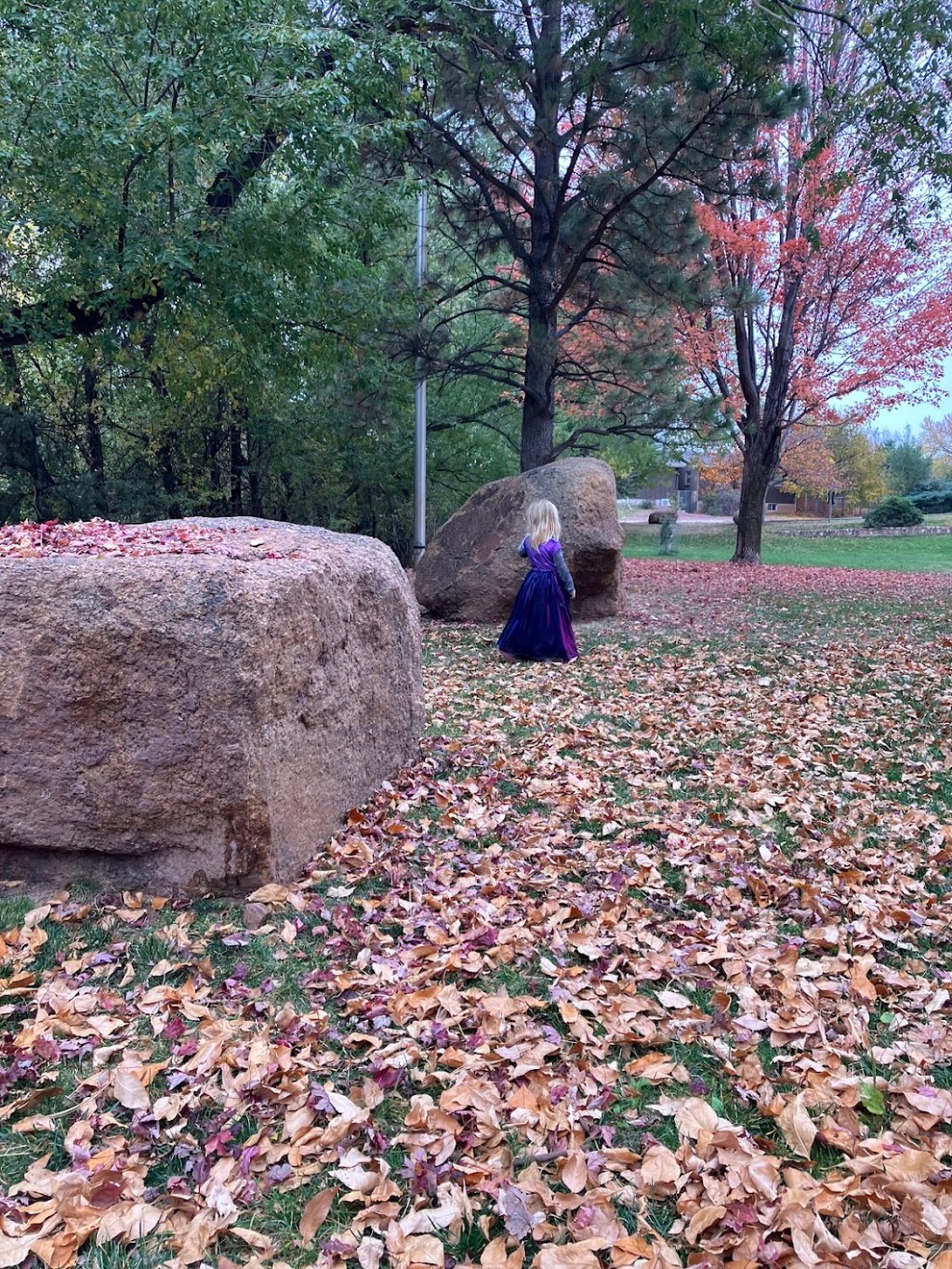
Fall is about feeling melancholy.
There, I said it (again). Honey, you can make fun of me. I know my wife will smile when she reads this because she gives me grief every time I utter the word, which happens often this time of year.
Since I’ve been known to misuse terms from time to time — my vocabulary is terrible, especially for someone who identifies as a writer — it’s possible I’m thinking about melancholy all wrong. Maybe that’s why she smirks. Maybe I should pull out a dictionary and get it right. ….or maybe not. At the end, you can decide.
Regardless, there’s something about the fall that compels me to say and write the word ‘melancholy.’ It flows from my lips like Pumpkin Spiced Lattes pouring out of bottomless Starbucks coffee cannisters.
I don’t know what it is — cross-country, colorful leaves, country roads, Pumpkins, flannel, hunting, squash soup, harvested fields, football, puffy vests, hot cocoa — but autumn has a way of making me somewhat somberly reflect on the past and solemnly consider the future. This fall, I was doing both a lot more than normal. Perhaps the weather’s extra melancholiness — super wet, super dreary, kind of cold — caused this. It does seem like earth is presently groaning over whether or not it should actually give birth to winter.
The real reason I think I’ve been more contemplative is that I spent this gray period of the year (which, admittedly, is usually sunny and perfect here in Colorado) on a 10-week paternity leave. In other words, I had even more time than usual to think, more freedom to look around at people and places through a writer’s eyes, more opportunities to spy on situations for content and see ‘story’ in everything. Originally, I’d planned to maximize this ‘free time’ to 1) train harder than normal, 2) write more than normal, 3) travel more than normal, 4) podcast more than normal …and 5) take apart my electronic piano and finally fix the ‘F’ key.
Ironically, I ended up doing most of those things a little less than normal. I did, however, fix the ‘F’ key.
The poor sap inexplicably went mute a long time ago. Ever since, the task of fixing my decade-old, living-room filler piece of furniture hung heavily over my head as long as it remained unerased (see what I mean about me with words?) on the whiteboard to-do list.
On a rainy (of course) afternoon, I finally addressed it. I began the three-hour operation by turning on Vikings Fanline in honor of my father, whose fix-it skills I wished to magically summon from the depths of some untapped genetic reservoir. Among many other things, he taught me by example nothing sets the mood for a DIY project like the constant drone of miserable Minnesotans complaining about their team’s 4th-down call on the radio after an unfair loss. After selecting my soothing background music, I unscrewed every screw, ripped open the Casio’s ribcage, plucked up each white and black key, peeled off a piece of rubber — revealing malignant crud built up like the deadly gunk corroding a lifelong smoker’s alveoli sacs — only to, after all that tedious tinkering scrub a random, very hard-to-reach, tiny piece of circuitry with a toothbrush doused in rubbing alcohol. I did all of this while trying to make my 5-year-old feel involved, my 3-year-old helpful and my 11-month old from crawling over and grabbing one of the potentially fatal (for him) plastic pieces or tiny metal objects splattered across the scene.
There it was: my $500 Privia PX-160, splayed open so grotesquely a Vail Health ER surgeon might have thrown up if they’d suddenly walked into the room. When I finally stitched it back up, I found to my great delight that pressing the F key magically produced a sound. I jubilantly danced my fingers up the F Major scale for the first time in months, proud of my success in the do-it-yourself department, which I rarely visited. I’d forgone an afternoon Ercolina Trainer session for this! I’d canceled a gravel bike date with dirt to struggle through You Tube videos and various online manuals, all to complete a project which theoretically would enhance the lives of those living under my headship — all while Fanline glazed over any frustrating moments I’d endured along the way, sort of like how good frosting sweetens a bad donut during a miserable day.
No wonder my dad liked projects.
Music filled our house, the F Major scale’s melodic intervals rising with my bourgeoning confidence. Then all of a sudden, the pitches of my soul came crashing down. I compressed the ‘A’ key with my ring finger. It was stuck. Oh great, I thought. A new problem!
No wonder my dad could become consumed by projects.
In some ways, the piano de- and reconstruction, emblematic of fatherhood in general, was a microcosm of my entire paternity leave: High hopes and huge investment; periodic points of positivity; confusion, followed by crushing failure; never actually watching a Vikings game, only listening to Fanline after; lost time everywhere, all of it seemingly wasted on insignificant things. Throughout the summer and fall, injuries, weather, a string of DNS’s and other circumstances forced me to look inward and see, just like the crap buried deep inside my piano, how sinfully dirty and selfish the most unseen core parts of my heart were.
Not only that. I also saw how my selfishness affected those around me.
Much to the detriment of my loved ones, I can’t say I came to this important epiphany early on in the paternity leave, unfortunately. For at least the first 8 weeks, I tormented myself and everyone else with a constant stream of sentences beginning with “I need, I need, I want, I want, I am, I am, I have to, I have to” and so forth. I will say, thanks to the melancholy fall, I spent enough time introspectively analyzing myself to realize what was going on. I noticed that fixing things, like the piano, would probably require a great deal of work, possibly a similar amount of yelling but hopefully a lot less alcohol. Either way, it was bound to be messy.
It was, like the piano, something I wanted to put off to the side and deal with later.
You know, when I was in middle school — and I promise this has something to do with the main point of this column — I’d stand on the far end of a golf course in Bemidij after the last race of the cross-country season, staring at the place in the sky where the orange hue from the trees met the grayish yellow sunset around 5:13 p.m. As other teams loaded the bus and parents threw blankets around clammy, cold kids, I escaped on a private cool down to a hidden spot. Alone, I would think about my life (and all the things I’d done in the first decade, I guess?).
Mostly, I remembered cherished childhood memories which often, ironically, were attached to summer and winter. Even though the skies signaled a different season, I imagined myself in these Northwoods during the sunny days when school was far away and optimism reigned. I’d think about Christmas, when I’d cross-country ski through these very woods and build forts with my cousins.
This type of post-race pondering was peak melancholy, at least the way I define the word. Melancholy, as the dictionary defines it, refers to a deep, persistent state of sadness, gloom, or pensive thoughtfulness, often occurring without a specific or obvious trigger.
It’s weird because when I was standing there as a kid thinking those thoughts, I wasn’t full of pure sadness. Pensive thoughtfulness, perhaps, and while there was some sadness, I was only sad for a happy reason. I was sad because part of me wanted to go back to the summer; to go back to those Christmases; to hold on to the warmth in both and never let them go. I never wanted the cross-country season to end and I never wanted my summer at the lake to end and I never wanted to pack up the car and leave Grandma’s house at the holidays either. In other words, those images I conjured up in the reflections of the cold dew resting on red maple leaves painted the purest pictures of a state which could only be described as carefree childhood bliss.
This fall, some of my reflections were filled with a different, darker color. The melancholy mixture of happiness and sadness is a rainbow, a much misunderstood reality for un-musical folks who see the world in black and white and can’t hear life’s symphony, with all its different tones constantly ringing around us.
If the melancholy moments of my childhood falls were filled with memories I clenched tightly because I wished for them to become a present and eternal reality, the dark, leaf-changing ruminations of my adulthood were characterized by the unknown world I was currently constructing for my own kids. My meditations were filled with worry. I worried they would get to be 12, stare out over the woods after their last cross-country race of the season and be left in complete sadness. There I’d be, waiting by the car, full of regret, wishing I’d done things differently when I still had the chance.
Thinking this way terrified me. I should say, it terrifies me. Present tense.
I’ve tried comforting myself. I’m mostly a pretty good dad, I think. I love them, I hug them in the morning and read them stories before bed and sometimes surprise them with jammy rides to get late-night ice cream. I lead devotionals (most days), I work from home (most days), I discipline them Biblically (most days), I make them great meals (most days) and I wash the dishes without them even noticing. I even throw them on the bed before my afternoon bike rides, before I leave them for a couple hours, which I inevitably spend consumed by doubt, thinking about each one with every pedal stroke, my growing guilt churning around a chainring I’ll never escape because I’ll never stop wondering if I’m doing this right.
Yeah, I’m a pretty good dad, a mostly good dad, my self talk says again, trying to speak hope into the silence of my convictions. I’m a pretty good dad, a mostly good dad. Kind of like how an electronic keyboard with 87 working keys is a pretty good keyboard.
But man, that silent F is deafening. That tiny little piece of plastic way down in there needs to be cleaned.
Staring down the selfish desires of my carnal existence all fall revealed my failures as a father. I viscerally realized how my absence can dominate the dinner table as much as my presence can fill it; how withholding love and attention can cripple my kids as much as showering it can empower them; how some bike rides are totally not worth it and most puzzle sessions and gorilla rides totally are. I realized it’s not whether I will have an impact on my offspring (and their offspring), but how. It’s not whether they will turn into me, but when and where.
Whether they grow up listening to talk radio while they fix things or not doesn’t matter so much. What does is realizing that becoming a man or woman requires constant internal tweaking and Holy-Spirit-driven fixing.
Pondering my failures as a father is perhaps a more genuine state of true melancholy. But it’s not the whole story. After all, fathers do fail. I’m actually convinced failure is to fatherhood as melancholy is to fall. In his appropriately titled book, ‘Daddy Tried: Overcoming the failures of fatherhood,” Tim Bayly offers our one hope: Jesus. He offers restoration. He can clean the circuitry so each note rings right.
Our earthly fathers fade away like fall leaves. If they were good, we mourn the loss, Bayly writes. In our grief, he says, we remember our Almighty Father who never leaves us nor forsakes us. What an amazing truth: the God who made us loves us and provides for us. Bayly points out that “We initiate our children into this tender love of their heavenly Father” by modeling it ourselves. It’s a weighty responsibility.
My awareness of this fact is one reason I’m somewhat encouraged by the depressing times I’ve spent staring at the changing Aspens while mentally running all the way down some of these devastating, hypothetical rabbit trails. You know, the ones where I screw my kids up forever. Those awful thoughts are evidence that I know how serious this calling is.
But the good news is that God is working on me. He is conforming me to the image of his son. He’s OK unscrewing all the screws, pointing out the dirty cracks and crevices, and scraping off the idolatrous dirt hardwired into the smallest, most powerful slots of my soul. He’ll send the tragedies, trials and triumphs required to purify me into the man He wants me to be.
And so, as we head towards winter, whenever it finally arrives, I plan to soak up all the fall colors for as long as I can. As I do, I’ll contemplate failures and fathercraft. I’ll think about how I can be better and how I can love more. I’ll keep Fanline on and I’ll keep tinkering around with my character, just as God sanctifies me and scrubs me with the alcohol-covered toothbrush I like to call the Trials of Miles in the Toddler Trenches.
I guess if I’m being completely honest, with you and myself, my melancholy moments these days aren’t as much about looking back as they used to be. They’re much more about looking ahead. About looking at the possibilities. I don’t dream of days gone by, but instead dream of future falls where my kids will look out at the kaleidoscope of leafy colors and see a gazillion glimmers of cherished childhood memories. Ones which will cause them to thank their heavenly Father even more than their earthly one. Ones which will force them to define melancholy the way I do: a serious, somber — but warmly satisfying — state of reflection.
That is what fall is about, and I don’t care what the dictionary says. Or my wife.
At least just this one time.


Leave a Reply