

A college cross-country team was walking an 8-kilometer course the day before its region championship when the captain spoke up.
“Right here is 1K from the finish,” he proclaimed, stopping to gather his motley crew in a circle. “Pick out a landmark like that bush, a tree, the flag up ahead, whatever, and plan — right now — that you’re going to shift gears at this moment.”
“Why?” a distracted freshman asked before reasoning with his older, wiser teammate. “I can just tell when I’m pretty close to the finish.”
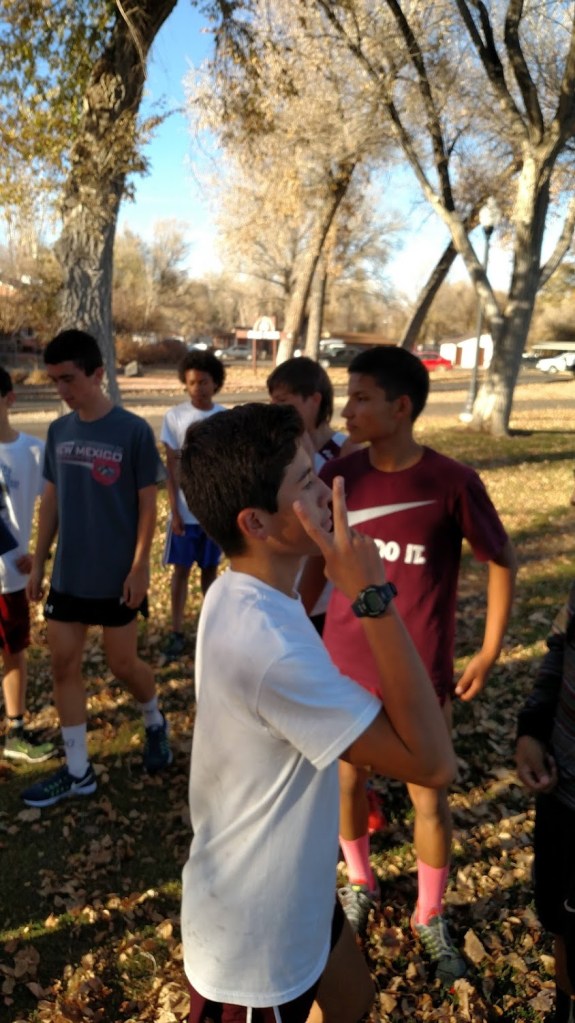
“That’s when I —” he continued, pausing for effect and staring with an immature grin at everyone else, “You know…compete.”
A couple kids laughed. Others rolled their eyes.
“Sure you do,” the captain replied. “Actually, the reason you should make a plan now is this.” By now, most of the group had stopped to listen. After all, this guy was always gritty in the most grueling races. A part of each person wanted to know his secret.
“When you get here tomorrow,” he said. “If you haven’t made the decision tonight, you won’t be able to in the race.”
Mental imagery tactics like the one above are powerful. The reason endurance athletes decide a plan and visualize successful execution is so that in the heat of the moment, when unbearable physical pain tempts their competitive mindset to give in and give up, they’re capable of rising above their natural inclinations.
It’s a lot like real life.
I grew up in a good Christian home with great parents who raised me to follow the Lord. My church equipped me to defend my faith. But eventually, I had to leave the nest. Going off to college was sort of the first real test: I would either own my faith or acquiesce to another way of living.
On the first night in the dorms, 2 1/2 hours from home, I distinctly recall receiving the offer to attend a party. I decided not to go. Actually, I’d determined I would decide not to go — or do drugs or have sex before marriage or become a lazy student or satisfy any one of the pleasures a 19-year-old boy would typically seek — a long time beforehand. I knew if I didn’t, my flesh would over-rule faithfulness — no matter how gritty I felt I was — in the heat of the moment.
Looking back, I realize my childhood and adolescence were filled with similar scenarios. The transition from homeschooled sixth-grader to scared and shrimpy ‘Seder’ wandering around a large public middle and high school forced me to either ground my academic inquiry in a Christian worldview I knew to be true — even when peers and teachers presented popular, albeit non-sensical, secular alternatives. In this case, the burn in my legs screaming ‘STOP!’ in the final 1K manifested itself as social embarrassment for standing up for concepts like a young earth, objective moral standards or biological realities.
Of course, everything intensified in college (and beyond, really).
I met my wife after one week at Bemidji State University. I knew I wanted to marry her that day! Needless to say, remaining pure for the next four years presented countless ‘heat of the moment’ decisions. But my youth pastor had encouraged me and my friends — back when we were 11, 12, 13 and 14-years-old, to pray for our future sex lives! Seems intense. Ended up being important.


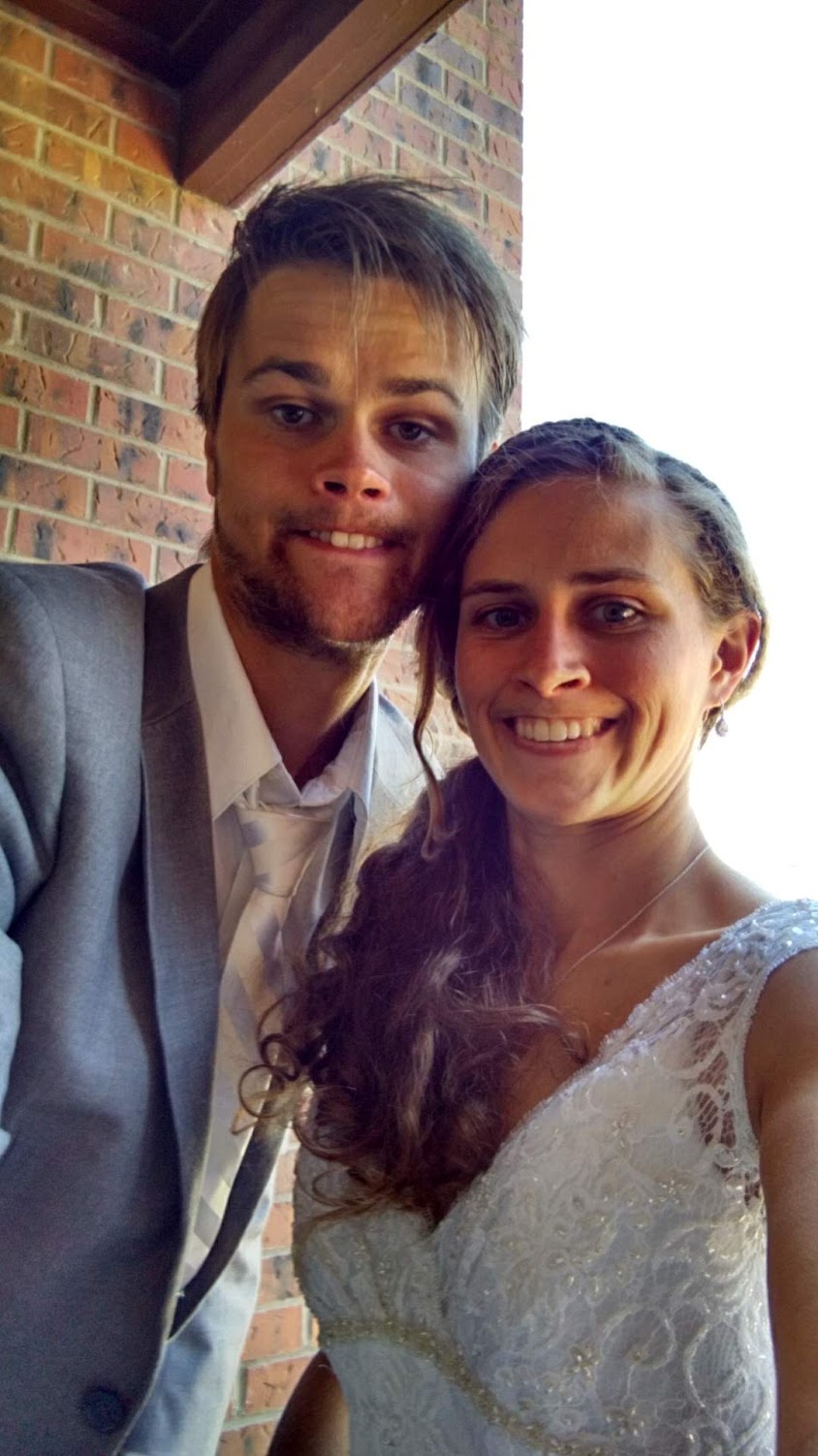
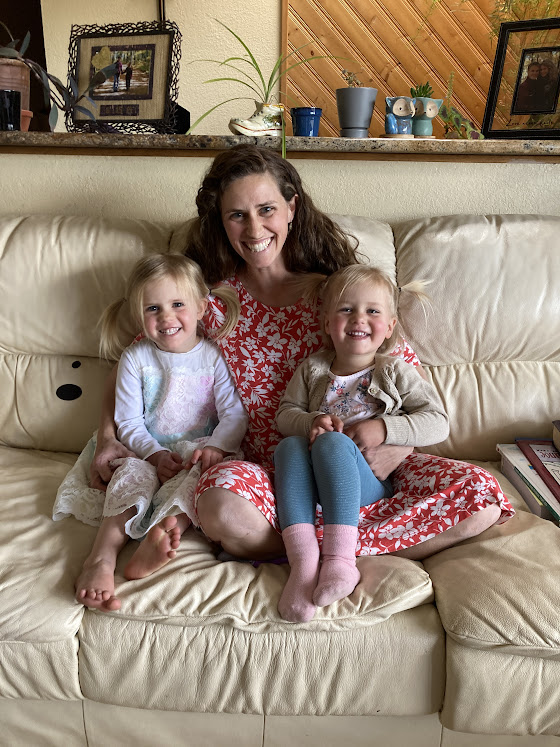
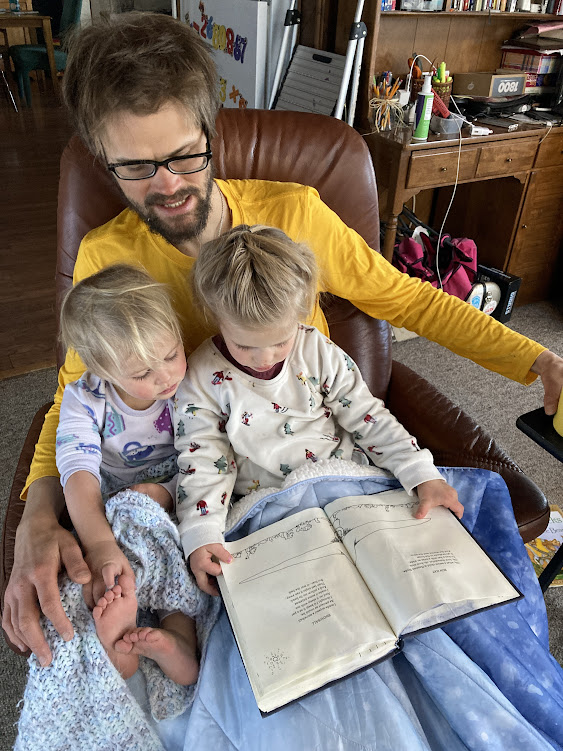
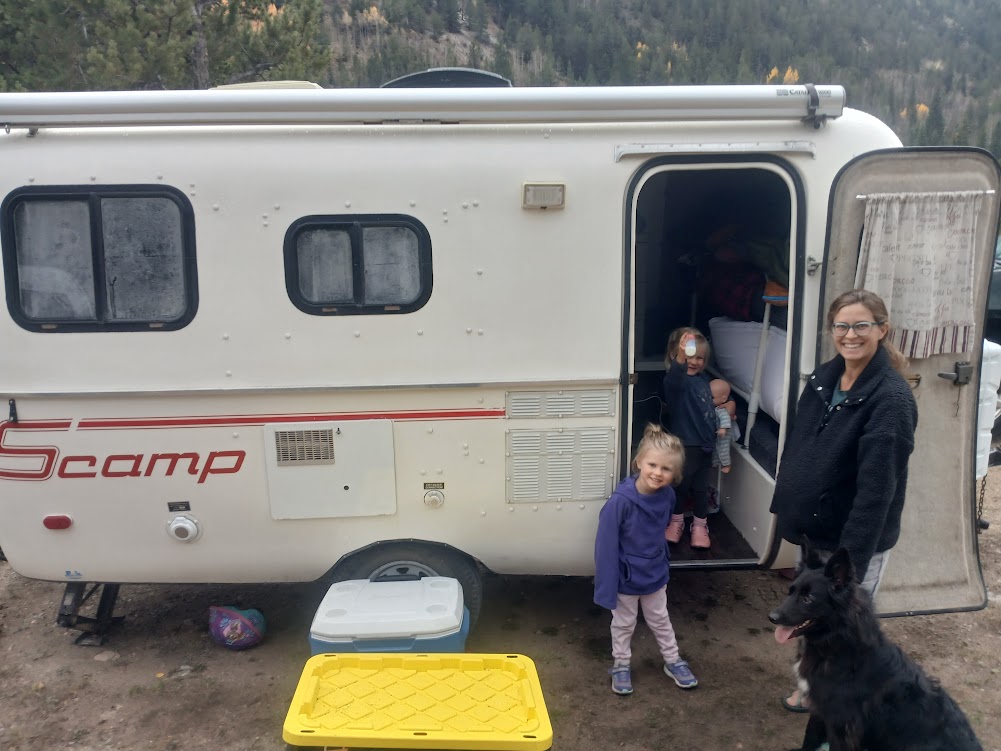

….the chaos grows: first year of marriage, from a tent to a sprinter to a camper, from two dogs to two kids and everything in-between…..
Throughout any marriage and eventually parenthood, I believe establishing good daily habits — bedtime prayers, attending church regularly, having a morning quiet time, Biblical disciplining of children (even — especially — when we don’t feel like it), tithing time and finances, and keeping short accounts in the most important relationships — depends largely on our “pre-race mental imagery.”
There’s a flip side to this, though, too. Maybe another running story can illustrate what I mean.
After what I felt was a very disastrous 2024 Pikes Peak Ascent, I came into the race this September determined to prepare — mentally and physically — to the absolute best of my ability.
I spent tons of time above treeline. I galavanted up Vail Mountain and Beaver Creek in repeated bouts of self-inflicted suffering, only to take the chairlift down. I poured through videos and results and message boards from PPA/PPM enthusiasts. I ran up and down 14ers on back-to-back days, conducted treadmill workouts at Pikes Peak-specific grades (11.5%) and paces, and constantly imagined the course during every single recovery run, speed workout and hill climb.
In the week leading up to the races, I sketched out a race plan and visualized various scenarios that could occur at different places along Barr Trail. I wrote target splits on my arm. I also wrote the names of my kids and wife, and yes, even Ajee, so that if I felt like giving up, I’d remember they were all supporting me, thinking about me and waiting for me at the bottom.
Without getting into nitty gritty numbers, the basic pacing agenda for me was this: don’t press — EVER — at any point in time…until 1-mile to go. In a 13.3-mile uphill only race in which you climb 7,800 feet from about 6,500 to over 14,000 ft above sea level, I knew holding back would require discipline. Many folks try to stake their claim to fame before the pack even leaves the pavement of downtown Manitou Springs. Others make moves on the W’s and most surge on the ‘flat’ section before Barr Camp….which isn’t even at the halfway point.
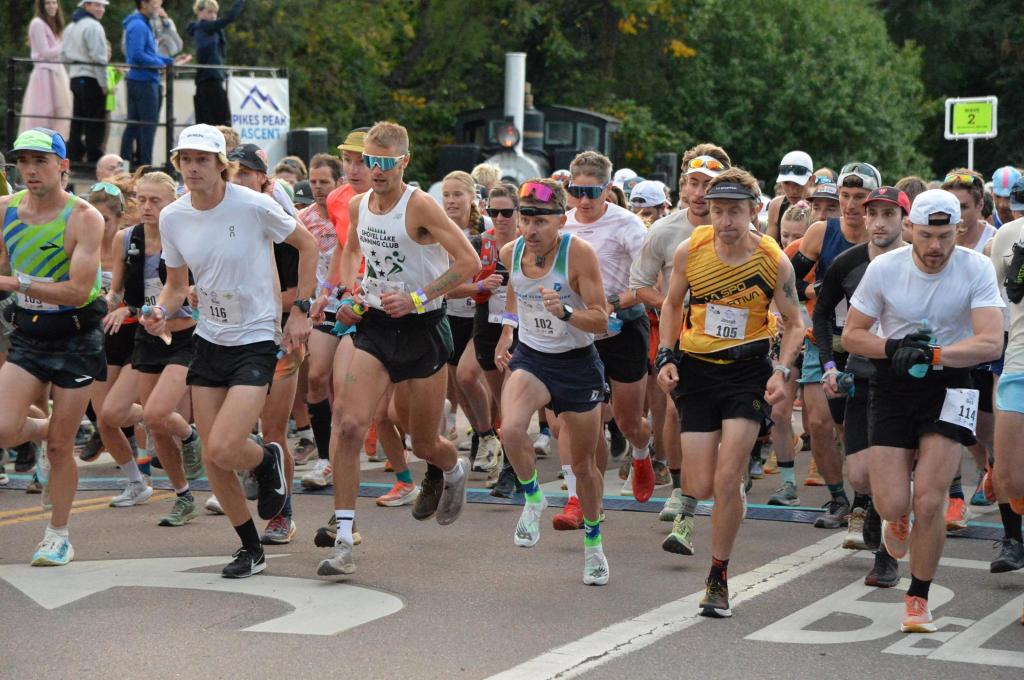
But I decided I was going to wait. And wait. And wait.
Even with this relatively conservative approach, I found myself in fourth place after three miles, pulling away from the chasers. I was also ahead of my goal pace. I didn’t allow myself to be alarmed and I didn’t slow down, but instead listened to my internal compass. I kept telling myself to be patient, to stay in the zone and, most importantly, to save it. I knew Pikes Peak inherently demands and squeezes everything from even the mightiest of aerobic monsters — surge or not.
Don’t be a hero now, I thought. If there is a time to be valiant, it’s with 1-mile to go.
As expected, the elites caught me along the flat and fast section that occurs six or so miles in. I watched as three athletes sped past me. One of them was a two-time champion whose PB was 31-minutes better than mine. We’d traded some local FKTs back and forth over the summer, which gave me a shred of confidence. But to be honest, any belief that I was on his level was still pretty buried in my psyche.
Still, I whispered to myself: if I put together my dream race, these guys would all come back to me.
And they did.
In the long, wooded switchbacks which never fail to destroy young people’s souls between Barr Camp and A-Frame, my feet felt light and my spirit full. I passed one runner and went after another. Above tree line, with two miles to go, I passed him. Approaching the Cirque, I could see second and third place. I was gaining on them! My plan was working to perfection!
I hit the switchback with the long-awaited triggering sign: “1 mile to the top.” I checked my watch. I was probably going to beat my 2024 time by 20 minutes or more.
This is it, I thought. Time to let loose.
Months of training, scouting, sacrifice, preparation…the last 2 hours of diligent climbing…it had all come down to this. I was having the dream race. I was in the flow state. This was the moment to strike.

I took one step over a tall boulder and felt every muscle in my right leg tighten. My mind raced, almost even panicked, for a millisecond.
Even when I put weight on my other leg on the very next step, I could still feel the right side desperately trying to avoid a permanent cramp. The repetitive pounding and cold temps had finally seeped into my cracks. A flashback of a late-October junior high cross-country race in northern Minnesota shot into my brain. I remember not being able to move my arms because they’d practically froze. I stunk that day, but my grandpa wrapped me in a hunting fleece after.
Back in Colorado, on America’s mountain, I wondered if the same fate would befall me here. In an instant, I’d gone from believing I could maybe get second overall to hoping I’d be able to just finish.
I’d gone 94% of the way through the race — all sticking to my pre-race plan — and in one step, I was forced to blow it up.
“Let’s go boys,” I said to myself (yes, I in fact do derive energy by channeling the Minnesota-accented voice of Herb Brooks for my self-talk mantras).
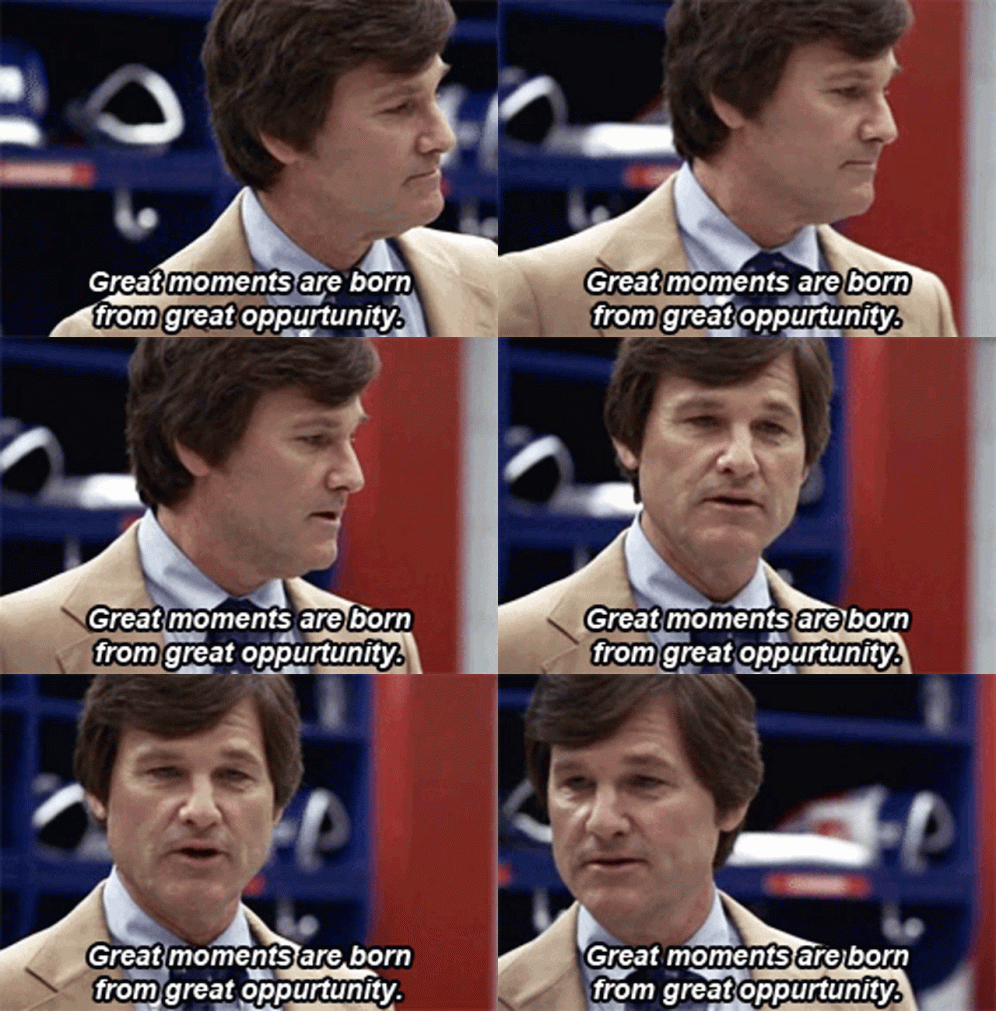
“You can do this,” I continued. “You can do this.”
Entrenched in a warlike state, I immediately shifted my focus to one objective. One simple task: don’t walk. Stepping over this boulder had caused the muscle cramp. Don’t give it a chance to happen again…. You’re on the edge, but you can finish this thing.
I shut off any visions of transforming into Steve Prefontaine over the last mile (“I’m going to run the last mile in 12 minutes and I dare anyone to go with me,” would have been my altitude-adjusted version of his famous pre-race quote prior to the 1972 Montreal Olympic 5K) and focused on the task at hand. I reoriented my expectations and my priorities. My job was different. It wasn’t what I thought it was going to be, but now, all hands were on deck for this.
Isn’t that kind of what it looks like off the course, too?
How often do we create a dream life in our mind? We picture it. We prepare for it. The perfect work-life balance. Our visualized expectations of the advantageous career progression, the ideal home, city, car, body, social profile, family size, retirement trip, etc. are magnificent. In those visions, we finish an Ironman, celebrate Christmas with the whole family every year and watch the Vikings win the Super Bowl (OK, I’ll admit, that was a stretch).
And then…life happens.
You get fired. The company goes under. You lose a limb, a child or a parent. You get sick or injured and can’t train. Google hates you. Your 401K tanks or your dad needs more care in his old age than you expected. Local politicians in the city you thought would be great end up flushing the government down the drain — or maybe you realize you’re actually a small town gal. The kicker goes wide right….
What do you do?
All of a sudden, your pre-race visualization is challenged. So, you adjust — with trust.
“Adjust with trust! Adjust with trust!”…sounds like a segment from the Common Man Show.
Being optimistically nimble in your outlook (future article coming!) is as much a characteristic of mental strength and resilience as visualization before the event is — in athletics and life. In fact, they go together.
I say ‘adjust with trust’ here because there is an element of faith at play. When I stumbled at the Cirque, a very visceral part of me was shocked and surprised because it felt like my body was failing me — unexpectedly. Maybe that’s how you feel in your daily walk.
Perhaps you thought as a 20-something that you’d spend your entire life as a missionary in Peru with your bride. Now, six kids later, you put on a suit and tie and drive from suburbia to an office in Chicago. You’re asking God, ‘What is this? How did I get here?!’
Or maybe you’ve spent your whole life dreaming of having a huge family. And one appointment later, you find out you’ll never carry even one baby to term. You’re asking God, ‘Why?’
The fact is, we can visualize all we want, but at the end of the day, the sovereign God of the universe dictates what happens, not us. Our pre-race paradigms explode. Thankfully, he works and wills in ways that are for our benefit and his glory. And so, we trust.

So, what’s next? I’m (check’s date) 34?
I mean, for now, let’s face it: I’m in the thick of it. Two kids and a third on the way…. I’m part way up the Ws, unable to see the summit and I’m checking my heart rate to make sure I don’t blow up.
But eventually, I suppose, I’ll become an empty nester. At some point, if I’m lucky, I’ll be a grandparent and then maybe even retire (Alright, let’s face it, archeologists and paleontologists will one day peel my old, dead rigor mortis-laden lips off the microphone and my skinny fingers off my keyboard and remark, “Egad! This poor blogger never mastered SEO his entire life!”).
What does stewardship at those stages look like? For starters, it means being thankful in all circumstances. There’s a lot of things that could happen down the road; nothing is guaranteed. But it’s also good to prepare. At a bare minimum, that probably means listening to some of the older captains on the team. Then, prayerfully asking for wisdom and faithfully believing it’s been given.
Lastly, at some point, we all have to pin a bib on and run the race.
—-Keep on Striving. Keep on Skiing ———


 Seder-Skier.com
Leave a comment