

WARNING: THIS BLOG IS PROBABLY NOT ABOUT WHAT YOU THINK IT’S ABOUT
This post is dedicated to my mom. I have her to thank for modeling what it looks like to have an unquenchable thirst for trying to become the best version of oneself in everything. It’s admittedly a dangerous trait, but I realize now it’s the one that has shaped me and served me more than anything else.
For better or worse, we don’t have to try very hard to ‘pass on’ some qualities to our kids.
After an FKT attempt up Mt. Elbert in August, I was taking a warm Epsom salt bath while slurping up my chocolate protein smoothie when my oldest daughter, Novi, burst into the bathroom to check on me.
“What’s that?” she asked.
“A post-workout protein shake,” I answered. She examined my salt-crusted legs soaking in the tub. Her little sister, Ella, stormed in to see what was happening.
“I’m going to run up Pikes Peak,” our youngest somewhat randomly announced (Nature? …{sigh}…nurture.). After glancing around for a few more seconds, she decided nothing taking place in the room was all that interesting to her and left.
“What are you doing?” Novi inquired again with a curious tone only 4-year-olds possess.
“I’m taking a recovery bath,” I replied scientifically. “This warm water helps the blood flow.”
I didn’t care to explain the purpose of the Epsom salt. I guess my dad told me once that Epsom salt helps with almost anything — from getting slivers out and calming fevers down to healing muscle aches and probably patching up potholes. When you’re too poor to afford Normatecs (still open to a sponsorship!!!), this is what you do after running up Colorado’s highest mountain for the second day in a row.
Speaking of Novi and Normatecs … a month later, I had my legs wrapped up in the space-age puffy compression pants after completing the Pikes Peak Marathon. Novi and Ella were anxiously waiting for me to be done so we could load up, drive to Wendy’s in Woodland Park and order Frosty’s. My pregnant wife — who’d watched the kids while I did millions of mountain runs and conducted equally high numbers of the aforementioned post-workout Epsom salt baths all summer …and then babysit the kids while I did the PPA/PPM double… — sat on a chair to rest and wait. The last three days had been centered around me and my pursuits. Our traditional celebratory Pikes Peak ice cream was one of their little rewards. It also made the trip a little more about us.


Alas, with seemingly no regard for others — either my family or the other sore athletes filing off America’s mountain — I kept clicking the ’15-minute’ massage selection over and over and over again until finally, even I felt bad.
“Alright,” I said, looking at the gracious workers who grabbed ice and water for me and even donated a Clif Bar to the caloric recalibration caused by two straight days of racing. “I suppose I better let some other people use this.”
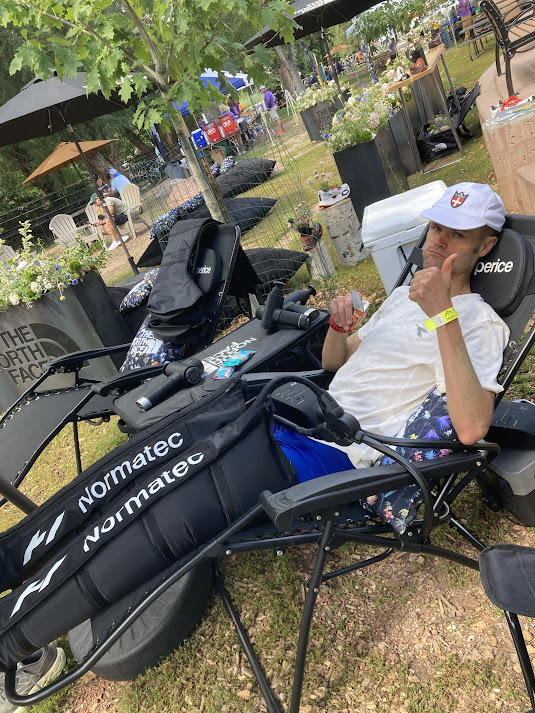
About 14.7 seconds later, the heavens opened up, rain started to fall and the Normatecs went into storage so no one could use them. I did feel bad about that.
About 14 days later (are you keeping up with the timeline?) my wife was in a thrift store with our two daughters. She asked them: “What do you think Daddy would want for Christmas.”
Ella replied with a list of things she surely couldn’t think I would find useful — a stuffed elephant, a stuffed dog, a stuffed giraffe …and something — anything – blue (her favorite color).
Then Novi spoke up.
“We could get him those pants so that he can use them for recovery after he runs up mountains,” she said.
Now, if you can’t tell which parent gave which child which trait, I probably haven’t done a very good job including key details so far in this column. Still, when this story was reported back to me, I was shocked.
I’ve heard of the concept of nature vs. nurture. I know parents pass personality traits onto their kids. But the fact one daughter was innately so thoughtful, observant and giving — like my wife — while the other derived gifts by looking inward a bit more (like dad…..”Oh, this Sporthill jacket is amazing…..surely my brother will love it!…it might even fit me…“) seemed crazy. Believing we passed that on through, you know, our DNA, seemed almost unscientific.
At the same time, both girls mimic their mother all day in the way they play. Ella famously was rocking her ‘crying’ baby before she could walk (9 months) and Novi has spent many hours of the Leadville-to-Duluth drive ‘breastfeeding’ various dolls. They copy me a little, too.
Both of them tap away on broken keyboards attached to blank cardboard ‘screens’ pretending to be sports writers from time to time. Novi at one point last winter was very intrigued with waxing her skis….but irons are hot and I didn’t want to push her too far. Plus, do we really want her copying me when it comes to ski prep? Somewhere out there, Col. Pitchfork is screaming at his screen: “You don’t need gripwax you goofball! Just double-pole it!”

Anyway, awhile back … before I had kids — when I had time to read books — I tore through David Epstein’s “The Sport’s Gene,” which examines whether or not athletes are ‘born’ or ‘made.’ To some degree, the answer is (as with most things in life) both/and.
The TLDR takeaway from that book for me was ultimately: 1) who cares …we are who we are and we can either be lazy or maximize ourselves ….but also…2) maybe this is why the Norwegians are better at skiing than everyone else…
When I thought of the title for this blog, I actually didn’t intend to drive down that road, though it might be what you expect or even desire.
Alas, I actually was inspired to write this after listening to a coach on a podcast provide a tip I hadn’t really considered or even heard before. She pointed out how coaches need to consider how they act and react in certain situations. Their body language and presentation can have a big effect on impressionable athletes.
For example, when an athlete asks a tough training question (i.e. challenges the plan or asks for clarification), shows up at the first mile of a 5K looking destroyed, or misses the game-winning free throw, their coach needs to have the ability to almost step outside the moment and think about how their presence, tone of voice and actual advice could impact the athlete’s perception and digestion of the moment. Composure is key.
Often our reactions are juiced up a bit when we see one of our own undesirable traits manifest itself in our pupils.I remember one of my coaches had a knack for pointing out this one ‘flaw’ in my basketball game. Whenever it surfaced, he pounced all over me in an emotionally charged way. Looking back, I wonder if the reason was because the ‘flaw’ was also something he’d struggled with.
There’s already been moments in my young parenting career where I’ve caught myself engaged in similar behavior. This isn’t surprising. After all, it’s human tendency to be annoyed by things for the simple fact of noticing them (This free relationship advice could save thousands of marriages) …and it’s way more likely for us to notice things in others that we are intimately familiar with in ourselves.
Maybe your kid (and you) lack grittiness or struggle with laziness. Maybe you’re a parent who struggled with fear of failure. If so, you’re likely to notice it more readily when it manifests in Junior. And…you’re also likely to react in an undisciplined, less sympathetic way because 1) it’s a negative trait and you know that better than anyone… and 2) Since you’ve been working through it for the last 10, 20 or even 30 years of your life, you’re getting a little impatient.
It’s easy in those moments to not ‘step out of the moment’ and give your kid what they need, but instead react ‘in the heat of the moment,’ in accordance with your natural flesh.
“Just get in there and race/play/sing/act.”
“You’re overthinking this.”
“It’s not that big of a deal.”
“Don’t X,Y,Z.”
“You need X,Y,Z.”
“Don’t talk so negative.”
“You are not going to quit.”
“No matter what happens, no one really cares at the end of the day.”
“It’s just a pre-season/regular-season game.”
“It’s just a sectional/conference/state championship.”
“You need to just get over that.”
Now, those quotes, taken in certain contexts, aren’t problematic at all. In fact, they probably provide pretty sound reasoning and advice most of the time. But most of us can probably imagine the tone they’re often delivered with and the situations they’re often dished out in.
It’s easier for the preacher, who has been fleshing out the ins and outs of their fear or their weaknesses in this department for the last couple decades, than the recipient — your kid — who is brand new to the battle. So, what does he or she need? Tough love? Empathy?
The answer is the same as in the nature vs. nurture debate: both/and.
Parents and coaches have to kind of be all things: Tough. Loving. Sympathetic. Hard. Compassionate. Forward thinking. Present. The other hidden element to the podcast guest’s advice is the fact that parents and coaches also need to remember that however they react is not only going to impact their kid or athlete. It’s also going to inform them.
When you lash out with uncontrolled anger and a raised voice to your kid because you told him 10 times to not do the thing and he did the thing, you’re showing him that losing your temper is OK to do, at least once you’re the biggest guy in the house. Similarly, when you fail to control your temper, yelling at a ref for a bad call, you’re letting all the young men or women on the bench know that this is how you handle “injustice” and frustration.
When you react defensively to an athlete who is asking about the purpose of some threshold workout or recovery pace, you’re not demonstrating epistemic humility. When you look panicked reading off those mile splits because he/she is way off pace, you’re modeling how to handle unexpected adversity. On the flip side, when you calmly look at your point guard and say, “after you make these free throws, we’ll throw on a press,” you demonstrate with your action what trust looks like. When you discipline a child with loving discernment and grace but consistent standards and consequences, you model how the heavenly Father disciplines his children.
I know I’ve written about Pikes Peak a lot lately, but I promise you it’s not exactly intentional. (I do have a miniature 3D topographical display of Barr Trail on my desk, but I swear I don’t actually consider it to be a holy mountain). It’s just provided some good metaphors recently. But on the point I made in the last paragraph, let me tell a quick story.
In 2024, I had a bad day at the Pikes Peak Ascent. My wife told me later she was really impressed with how I went to the Wendy’s and smiled and ate my Frosty with the kids anyway.
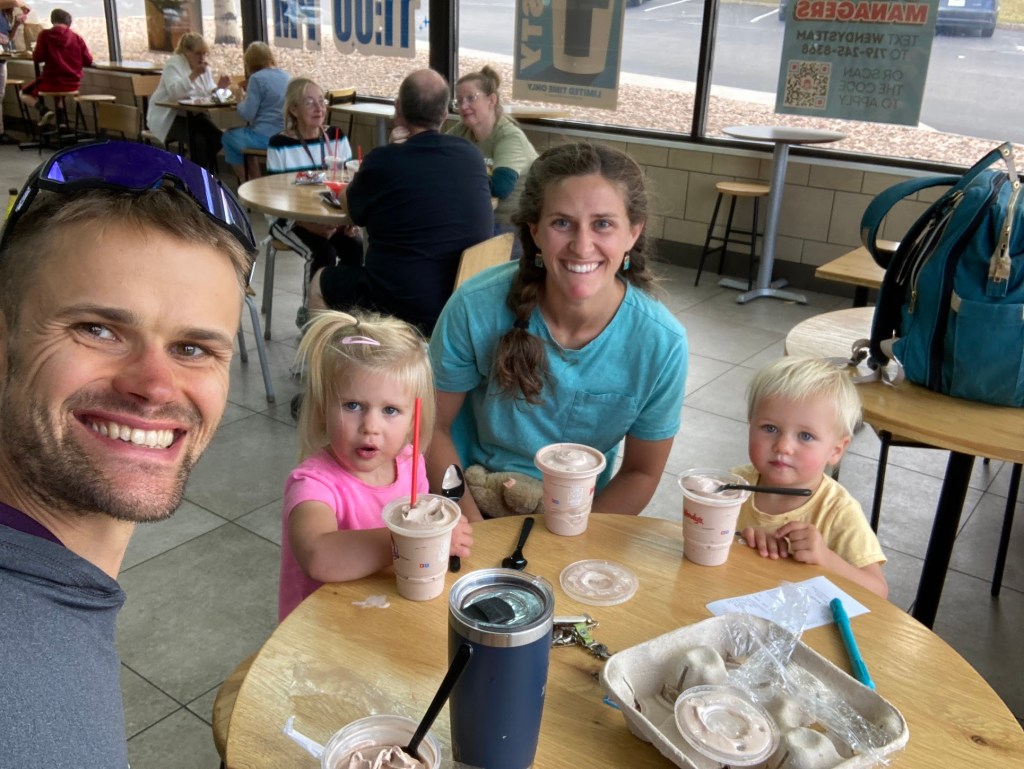
Looking back, I hope I showed my kids that win or lose, you get ice cream. I mean, wait. I hope I modeled to them a deeper truth about what it means to be competitive, to set goals, to strive and to handle disappointment with stoicism, especially if you’re a parent of two littles who really just want to have ice cream with you. Most importantly, I hope I gave a glimpse into what should really matter for a parent who is also an athlete: (guy off-stage in a whisper: “ice cream“) being together, with the family, and somehow, making the trip about us.
When I was chatting on a recent podcast with Erin Moening — whose ski coach at Highland Park High School was her dad — she said something that struck me about this parent-child dynamic. Sometimes, she said (and I’m paraphrasing a little) it’s hard to hear the hard truths from your parent.
My pushback?
It’s way harder to deliver the truth to your princess. Or to your firstborn son.
But ultimately, our kids leave the nest. Our goal as parents is to equip them to do so. That means our goal is ultimately to make it so they don’t need us. The goal for coaches, I think, should be similar. A well-coached athlete is someone who can branch out on their own, equipped with reasonable training principles, a foundational philosophical platform, competitive tools and — most importantly — adequate confidence in their ability to “figure it out.” A well-coached athlete is someone who doesn’t need their coach. ….but, they might end up looking, thinking and acting a lot like them. Nurture.
I should qualify all this by noting that just as no one has a corner on the market for coaching, no one has a corner on the market when it comes to parenting. Except maybe Doug Wilson. But most of us are, like one of my close friends reminded me the other day, just doing the best we can. Same with coaches.
So, take the good data points from your own experiences and consider the wisdom of people who’ve been there already. Then, observe and weigh the bad data points, too, until you have a vision you’re convinced, at least mostly — for now — is pointing in the right direction.
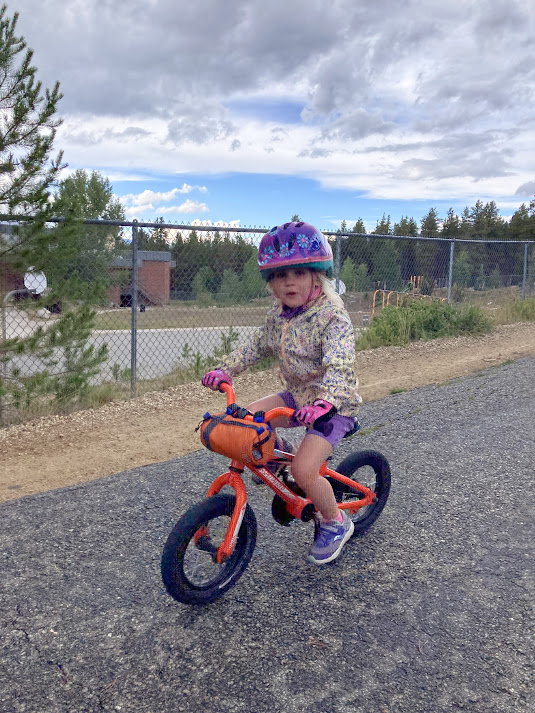
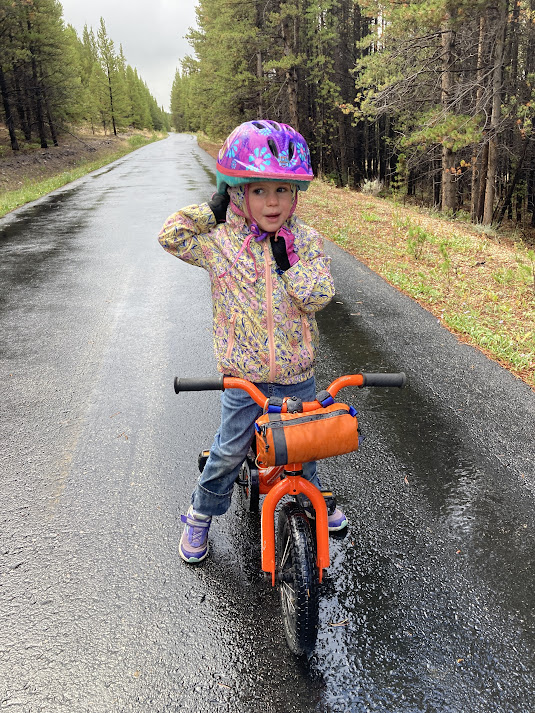
One more thing: don’t forget to just enjoy it. If I’ve learned one thing as a parent so far, it’s this paradox: the little kid stage seems endless when you can’t escape for a simple 10-minute coffee date with your spouse (heck, more like not being able to get in three consecutive sentences without being interrupted), but fleeting when you see them ride their bike for the first time.
While I know Novi didn’t inherit her interpersonal intuitions from her dad — or her penchant for reading books or her ability to descend technical trails on foot or her gift-giving thoughtfulness — I have seen a few of my attributes come through.

The night she learned how to ride her pedal bike at 3 (something her dad did at that age, too), we had to practically drag her in for dinner. After about 80 minutes of her looping the upper parking lot next door, I finally said, “Honey, it’s 6:45 … we need to have supper.”
“We can eat when I’m done with my biking,” she replied.
My wife laughed.
Nature?
Nurture?
In that moment, I didn’t think about my body language. I just reacted. I shook my head in disbelief, remembering the countless times I’ve held up a family meal to finish a workout.
“Unbelievable,” I muttered to myself, maybe bursting deep inside with some pride. “What have I done?”
It’s funny. I think I thought the same thing driving home from the hospital.



 Seder-Skier.com
Leave a comment