

For my 9th birthday, I asked for an odd present: notebooks.
That’s it. (The things I put my mother through…I am so sorry.)
What was my perhaps-not-entirely-age-appropriate, but inarguably bullet-proof reasoning?
I wanted to take notes.

Instead of longing for a late-afternoon party playing pinball at Chucky Cheese with my friends, I dreamt of long lectures in a crowded amphitheater, swirling those cool desks into place and neatly stroking my pen across spiral-bound, college-ruled paper with perfectly square, tiny calligraphy. As a homeschooled second grader, I relished my mom’s Bible history lectures largely because I took great pride in making neat outlines and filling up entire pages with timelines, boxes, paragraphs and arrows. In fact, I realize now that I liked taking notes more than I liked actually learning.
This past trail run season taught me my athletic wirings apparently run congruently with my intellectual ones. I tend to take more pride in the process than the performance. The neat and tidy training log — chock full of hours accumulated, distances traveled and feet climbed — is more important than, you know, doing well in the actual races.
Then, something crazy happened: I threw out my training journal.
I know, I know.
“Anathema!” come the shouts from Nordic nerds everywhere.
In our circles, the training log is touted as an absolute essential to tracking the stress-recovery balance at the micro and macro level — perhaps the only real key to improvement. But there’s a problem I experienced and am observing all around: this data-tracking tool is the very thing that causes athletes to lose sight of what really matters.
Andy Newell’s first Race Ready Podcast episode was titled “Training Logs: A Secret Weapon for Smarter Training.” All joking aside, I believe training logs are in fact a weapon. The question is, will they be leveraged for positive gain or destruction? He said something in this show I’ve thought about a lot over the past summer and fall. Probably because I didn’t use a training log for the first time in, I don’t know, 25 years!
At one point, Newell’s co-host, U.S. Biathlon coach Brian Halligan, asked him when athletes should start using a training log.
“I think it’s a slightly nuanced question,” Newell said. “Meaning, training logs at a young age are fantastic for athletes as long as they’re at a maturity level where they’re not going to be overwhelmed by it or get super OCD about it.”
“I think one of the most important things athletes can learn at a pretty young age is it’s not the amount of training you do, it’s the quality of training,” he continued. “It’s not what goes into the log, it’s kinda what goes into the bod.”
The Magic is in the Man, not the 100 miles
This past spring, I cut my ski season ‘short,’ going for my last crust ski sometime around May 5 or so. I’d been running all winter and was eager to ramp up even more as my eyes were set on redemption at the Vail Hill Climb and Pikes Peak Ascent.
A couple weeks later, however, I came down with a strange fever that lasted for nearly two-straight weeks. I couldn’t even get out of bed for the first two days as my temps reached 103. On the third day, I was able to reconnect with my familial society enough to realize my wife was coming down with the same thing I had. I went on kid duty for the rest of the week, popping a Tylenol each morning just to get things below 100. My running dreams felt dashed.
Finally, on one of the last days of the month, I decided to just try and baby jog to the cemetery by our house and back. It wasn’t even a mile. It took me a little over 10 minutes. All throughout, I coughed and wheezed pretty violently (at least my core got a good workout!).
It was hard to imagine I would be lining up for a 7.7-mile, 2,200-foot race up Vail Mountain in about a month….
After my somber return, I went to our back deck — partially to stay in the sun for a little while longer, partially to figure out what to do (since my mind felt like it should still be working out), and partially to do some heel and toe raisers while I guzzled water.
As discouraging as the run itself was, this moment crystalized something important: there were still things I could do — even then — to prepare for my target races.
“I might not be able to run very far yet,” I thought. “But faithfully doing these toe raisers will build up musculoskeletal resiliency so I don’t get injured when I do start racking up big miles.”
If I wanted a chance of being at my best on July 5 and Sept. 20, it was paramount that I took a very serious approach to the daily objectives. On the micro side, the two objectives manifested themselves in an increasingly polarized ‘work’ OR ‘recover’ priority for daily workouts. On the macro side, it was more complicated: some days were part of climbing weeks, threshold sessions at PPA-specific grades on the treadmill, or pure speed days on somewhat flat roads.
As each day went by, I found a pep in my step seeing obvious improvements and was invigorated thinking about the next day’s upcoming challenge or role in the overall plan. I was stunned to see my body bounce back and quickly gained confidence. Training was intentional.
And fun.
For the last 14-15 years, I’d catalogued almost all of my workouts in a handwritten journal. But for whatever reason — maybe it was the sheer length of time I’d been sick made — I didn’t feel like it even mattered to log anything at this point. So I didn’t. For what it’s worth, I’d also neglected to add up the cumulative hours for the previous year and that didn’t seem to affect the results of races I’d already competed in, several of which ended up being wins.
But it wasn’t primarily laziness yanking me away from recording all my hours. It was urgency.
When I realized medals at the Vail Hill Climb weren’t going to be awarded based on training hours, I decided it wasn’t worth worrying about what I’d done the last five or even 10 years, on paper. What difference does it make if my illness screwed up another 1,000 hour calendar year? At the end of the day, the whole point is to be the best I can be on the day I need to be, right?
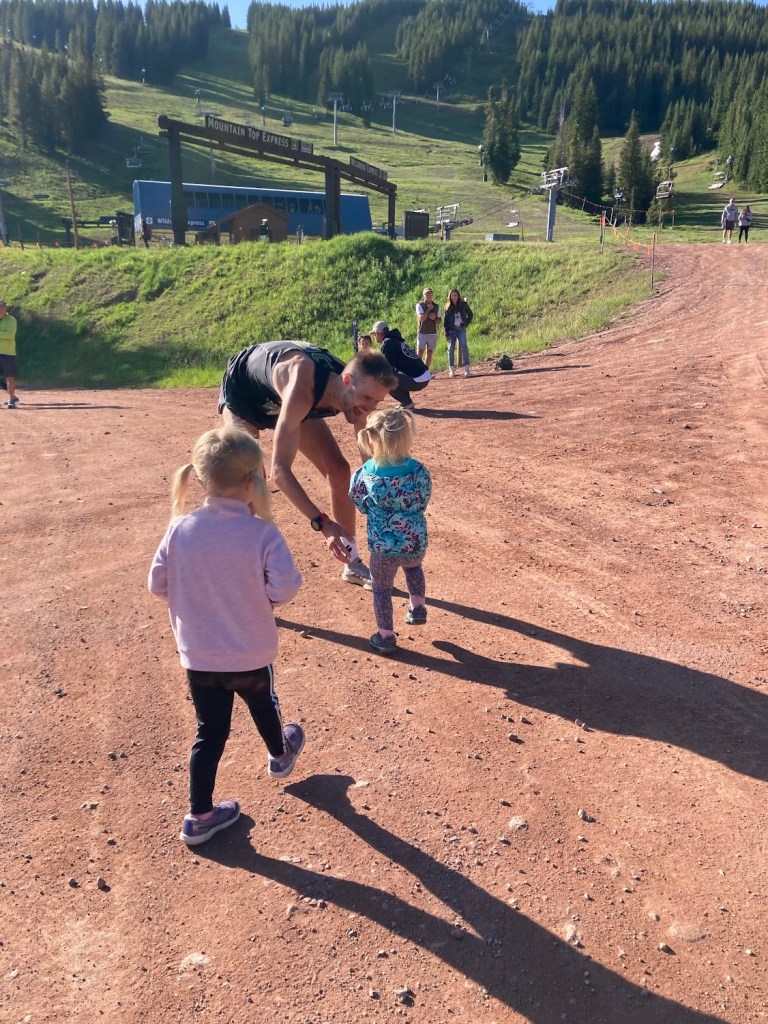
And so, I made my focus each day, each week and each macro and micro ‘block’ about doing everything I could do to be better. It seems so obvious, but this is where I truly think the training log is a distraction. See, when I had a training log, the focus became about doing everything I was “supposed to do” (which, theoretically, should make one better … but instead, tends to slowly control until the actual goal just becomes ‘winning’ at training logs.).
I remember my college cross-country team posted a mileage spreadsheet on the wall for all to see. Because I am competitive, especially when it comes to work ethic, I quickly transformed into a mileage monster. I was motivated by writing the biggest number next to my name, a task which quickly went from being a means to an end to an end in and of itself. Sure, running more made me better, but how many times did I go out for a 15-mile session when I probably should have taken the day off?
Bottom line: I felt duty-bound to meet what ended up being essentially an arbitrary standard all in the name of “improvement,” or “the process” or “training.”
And while the log does help you safely reach new levels, it seems each new amount or intensity or speed becomes another opportunity for OCD to strike. Now that your Sunday long run has reached 18 miles, a 12-mile day somehow feels unsatisfactory. Going 5-flat for 5 miles means a 5:15 split in your Thursday threshold is cause for concern. The whole week could be ruined since you’re 20-hour mark wasn’t reached on account of your nephew’s middle school orchestra concert. Instead of merit determining the effectiveness of “the process,” we make the process itself the goal. This happens outside of athletics, too.
How many of us have our checklists, our word-counts, our daily routines or other psychological safeguards arbitrarily determining what a ‘productive day’ looks like? Is it about actually cleaning the house, being a more effective teacher, connecting with a spouse or savoring time with family? Or is it just about posting the activity online so people know you did it? There’s a reason ‘if it’s not on Strava, it didn’t happen’ is quickly becoming an old adage. These things are all connected.
I should add an important caveat. Years of using a training log, following long-term and short-term plans, reading about training principles and keeping abreast on the current research all probably allowed me to throw everything out the window in 2025 and simply ask, “what should I do today — this week, month, etc. — to help me reach my goals?” I’m not sure if my approach this summer would work for say, 15-year-old me or even 22-year-old me.
It’s probably obvious to point this out, but we only know what we know when we know it. And our mental, physical and emotional capacities are limited by time and experience. When I was 21 or 22, I was in the midst of simply building up my overall capacity. (I was also madly in love, stressed about my 3-hour trumpet practice sessions and future career and trying to endure Fargo-Moorhead’s depressing climate on a daily basis). I was fixated on trying to string together as many 90 or 100-mile weeks together because I was convinced that was the route to improvement.
And in a very real sense, I wasn’t wrong — and I likely have those grinding weeks to thank for some of my successes now — but it still is probably also true that deep down, my mileage was a protective safe-guard for my ego. Even when I didn’t win, I could still tell myself that no one was working as hard as me. In other words, I never lost that competition.
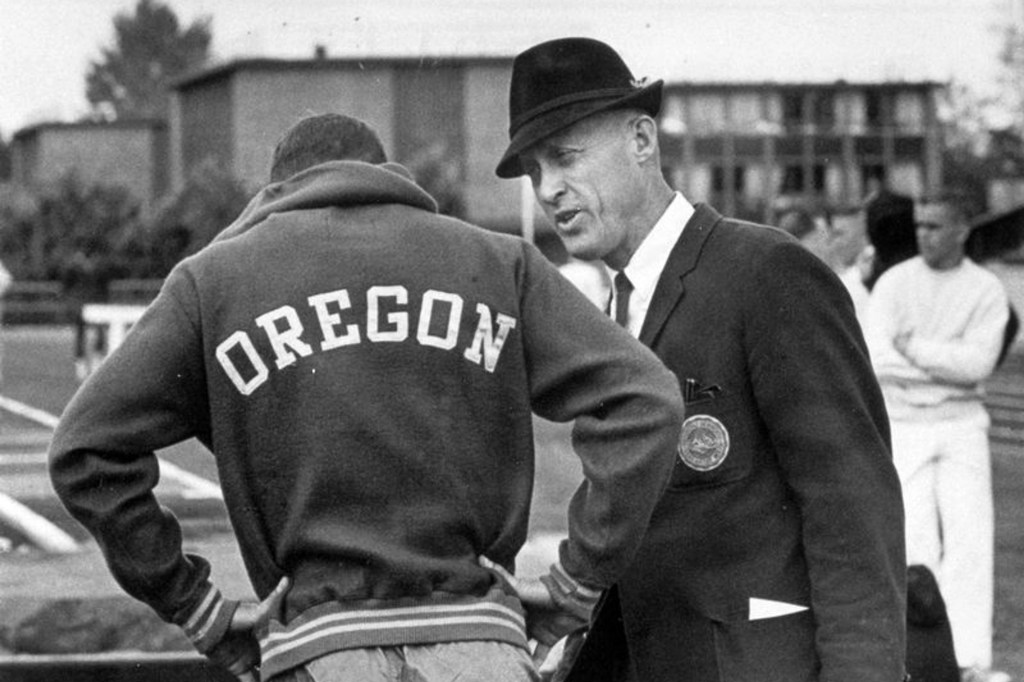
Bill Bowerman once said, “If someone says, ‘Hey, I ran 100 miles this week. How far did you run?’ ignore him! What the hell difference does it make?…. The magic is in the man, not the 100 miles.
Ask yourself: have I placed my athletic identity in what my training log looks like? Or, have I placed my athletic identity (not to be confused with your true identity, just to be clear) on a proper foundation?
I recognize now that far too many athletes — myself included — at a wide range of abilities, from pro to master blaster to developing youth and NCAA, aren’t actually sold out for placing their athletic identity in how they, you know, perform. They’re like 9-year-old me, taking notes for the sake of taking notes instead of learning why Abraham was so important. They still have this shackle around their necks: a training log. It holds a piece of their worth. It controls them a little too much.
Here’s the reality: your identity as an athlete actually comes down to three elements.
First, and most importantly, is your record of regularly (or irregularly) maximizing your unique talent/potential.
Second is your results (OOHHHHHH boy…SCARY!), by which I mean your objective times and places.
Finally, you’re ultimately remembered as an athlete by your unique intangibles. Were you someone who always was tough and bold? Or tactically stupid and reckless? What was your character? Selfless or selfish? Cocky or humble? Those things matter, too.
What doesn’t matter?
How many hours you logged last September. Bowerman was right… the magic is in the man.
Maybe it’s time to blow up your paradigm. If you’re the person whose identity is rooted in training hours, rigid, data-driven plans that “follow the empirical science,” or you feel a workout was “good” because you met your fueling goals, might I suggest you try something different — at least for a season (and I use the word ‘season’ here to mean a ‘season of life.’).

If you’re feeling stale, maybe it’s time to sign up for a race or two?
If you’re someone who doesn’t get nervous when you put a bib on anymore, maybe it’s because you do too many races. (And maybe that’s where you’ve placed your sense of athletic self worth…You’re the guy who races every weekend….)
The point is, maybe it’s time to blow up your paradigm.
Instead of hiding on the trails, sign up for an indoor track race, where the clock doesn’t lie. Beware, if you don’t show up ready to that, you’ll truly be embarrassed (talk about motivation).
Set yourself an audacious personal goal, put pressure on yourself to reach it, and actually care if you don’t. Don’t say, ‘it’s all about the process,’ afterwards either. Whether you win or lose, sit for a bit in the moment. Remember how it feels to be disappointed to not meet an objective bar you believe you’re capable of reaching. Relish the feeling of being at the top of the mountain, too. Just don’t stay there very long.
Whatever happens, use it to sharpen your focus and renew your spirit for the next build. Get excited for your upcoming challenge and really prepare — each day — for it.
….and if you think it might help … toss out the training log.
Ryan Sederquist lives in Leadville, CO with his wife and two daughters. He writes for the Vail Daily and is a part-time broadcaster for FIS TV. He runs, skis and bikes regularly with his 6-year-old Border Collie/German Shepherd mix, Ajee, who is very cute and loving and kind, except when she isn’t. This summer, he cut about 25 seconds off his Vail Hill Climb PR, but wasn’t super happy about the race as a whole. He opted to ‘sit in it a bit’ and two months later, shaved 20 minutes off his PPA time, which he was thrilled about. He only posts his best workouts to Strava because he is wildly insecure, and while he hasn’t reconnected with his training log yet, he believes the relationship “isn’t permanently over.”
 Seder-Skier.com
Leave a comment