
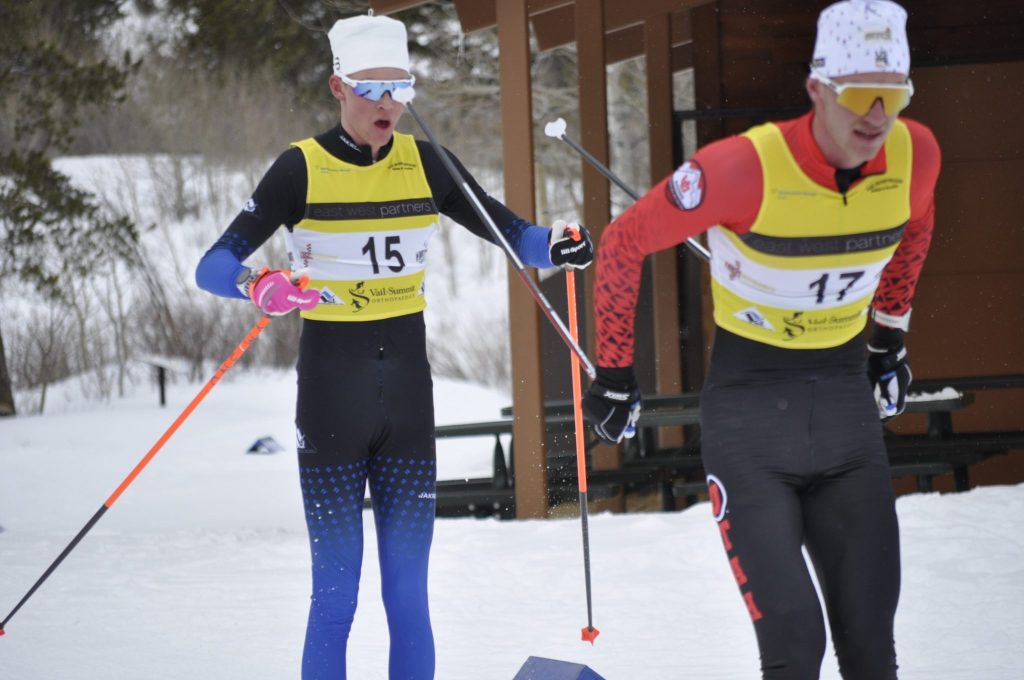
Will Bentley and Nina Schamberger have produced prodigious performances — and are familiar with the ensuing commensurate pressures. Whether they like it or not, it’s a part of their ski stories.
Bentley won a junior national title two years ago and Schamberger burst onto the scene when, as a 15-year-old, she finished third — behind only German and Norwegian-born University of Utah skiers — at the Raoul Willie Memorial skate sprint, rising to No. 1 in the world for her age group in the process. But in the world of endurance sports, early success doesn’t guarantee titles later on. Kids grow. Athletes get hurt. Sickness strikes.
Last year, adversity added its own chapter to both Schamberger’s and Bentley’s narratives. Injuries and illnesses prevented the Colorado-born-and-raised skiers from putting on a bib at a few key events and led to less-than-satisfying performances in others.
“I’m only 19, but I’ve failed so many times,” said Schamberger, who said she’s actually been battling various mental and physical health issues since she was 14. “I’ve set lofty goals and just not even come close to them because of outside issues. Last year I feel like a lot of that came to a head.”
The University of Utah sophomore had “an OK” start to the 2023-2024 campaign, finishing third in the Super Tour 10-kilometer classic on Dec. 13 at Kincaid Park and seventh in the same event at the national championships in Soldier Hollow the following month. But a recurring back injury resurfaced in the 20k mass start at the Junior World Championships in Planica last February. She held on for 27th place — nowhere near what she felt was her true potential — and then suffered through a 10-kilometer classic race, finishing 56th.
A week later, Schamberger was forced to turn down her first World Cup starts — in Minneapolis — refocusing her efforts to be healthy in time for NCAAs in March.
“Unfortunately, that didn’t work for me,” Schamberger admitted.
Throughout the next two months, Schamberger’s agonizing discomfort incessantly haunted her, surfacing even while sitting in a lecture hall. Multiple MRIs failed to diagnose the problem. Prescription pain meds dulled the pain, but barely made easy skiing doable.
“But once I got past that 30-minute mark (in) races, it just became excruciating.,” the 19-year-old said. “And once I got to that point, it took a really long time to go away again.”
The Summit Nordic Ski Club alumna scraped the bottom ofthe cross-training barrel to salvage fitness, overcompensating indoor spin workout volume — her main training modality at that point. But honestly, she felt worn out. Maybe even over-trained.
Not producing performances proportionate to her potential at her third junior worlds didn’t help. Explaining her decision to pass up the first World Cup on U.S. soil in four decades through a tear-filled conversation with U.S. development coach Greta Anderson was about as hard as a North American Nordic nerd could imagine.
“I was just kind of a mess at that point,” Schamberger said.
Then came NCAAs.

Subscribe to continue reading
Subscribe to get access to the rest of this post and other subscriber-only content.
 Seder-Skier.com